Updated on 2026/04/06

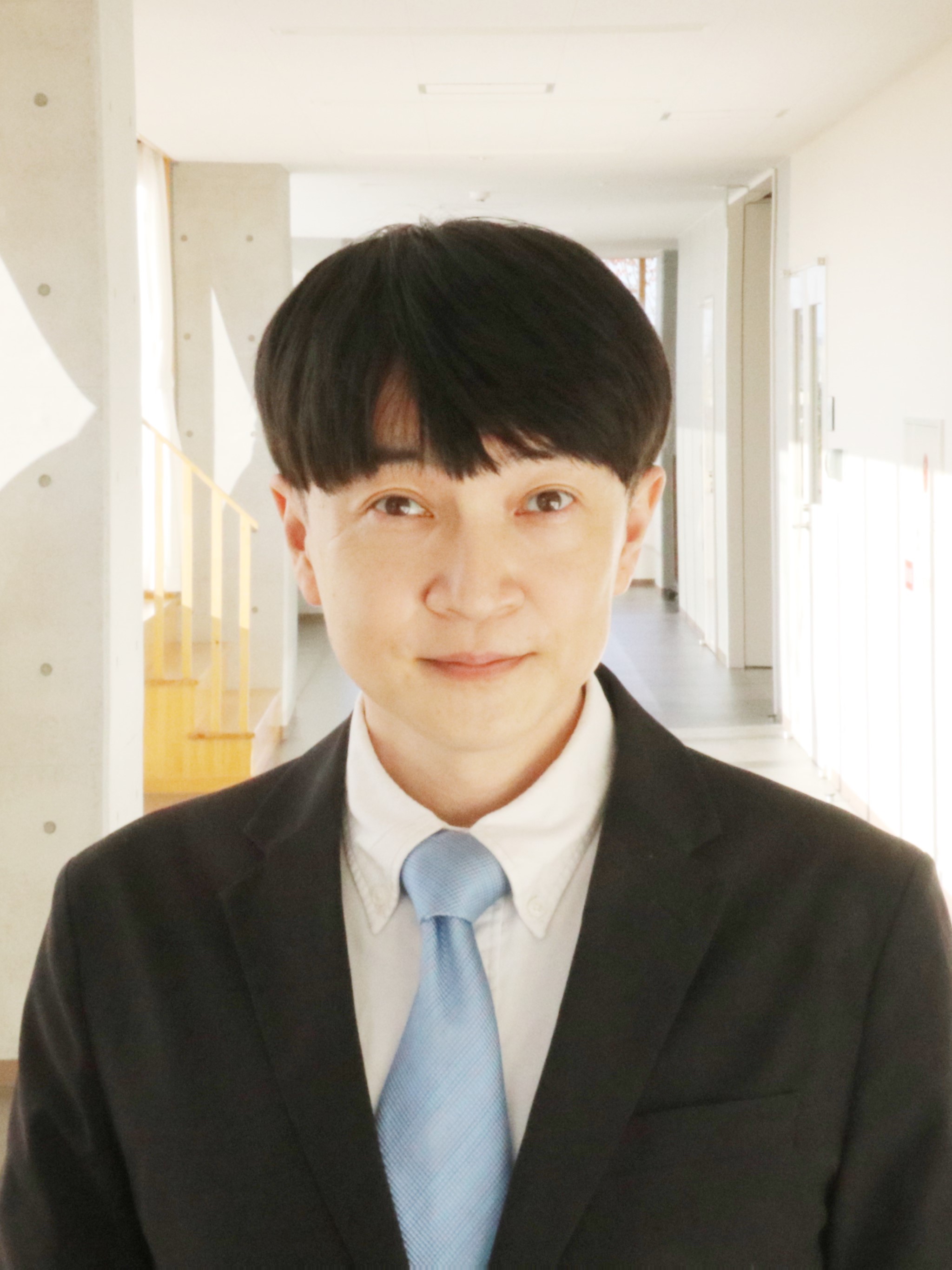
写真a

 
Shunsuke Inagaki
 
Organization
Graduate Faculty of Interdisciplinary Research Faculty of Education Education (Center for Educational Research) Associate Professor
Title
Associate Professor

Research History

  • Wako University   Part-time Lecturer

    2026.4

      More details

    Country:Japan

    Notes:Taught Methods of Teaching Informatics

    Job classification:Lecturer (part-time)

  • Bunkyo Gakuin University   Faculty of Human Data Science   Part-time Lecturer

    2026.4

      More details

    Country:Japan

    Notes:Taught Information Literacy I, Introduction to Data Science, and Information Literacy II

    Job classification:Lecturer (part-time)

  • University of Yamanashi   Faculty of Education, Integrated Center for Clinical and Educational Practices   Associate Professor

    2024.4

      More details

    Country:Japan

    Job classification:Associate professor/Lecturer (full time)

  • University of Yamanashi   Faculty of Education, Integrated Center for Clinical and Educational Practices   Visiting Associate Professor

    2024.1 - 2024.3

  • Tokyo Metropolitan Jindai High School   Department of Informatics   Senior Teacher

    2020.4 - 2024.3

  • University of Tsukuba   School of Informatics   Part-time Lecturer

    2019.4

  • Kokugakuin University   Institute for the Advancement of Teaching and Learning   Part-time Lecturer

    2019.4

  • Tokyo Metropolitan Kohoku High School   Department of Informatics   Senior Teacher

    2014.4 - 2020.3

  • Tokyo Metropolitan Oshukan Secondary Education School   Department of Informatics   Teacher

    2011.4 - 2014.3

  • Tokyo Metropolitan Suginami Sogo High School   Department of Informatics   Teacher

    2007.4 - 2011.3

▼display all

Education

  • Tohoku University   Graduate School of Information Sciences   Department of Human-Social Information Sciences   Major achievement

    2015.4 - 2022.3

      More details

    Country: Japan

    Course: Doctor later

  • The Open University of Japan   Graduate School of Arts and Sciences   Division of Arts and Sciences   Major achievement

    2010.4 - 2012.3

      More details

    Country: Japan

    Course: Master course

  • Tokyo University of Science   Faculty of Science   Department of Chemistry   Major achievement

    1997.4 - 2001.3

      More details

    Country: Japan

Research Areas

  • Humanities & Social Sciences / Educational technology

  • Humanities & Social Sciences / Education on school subjects and primary/secondary education

  • Humanities & Social Sciences / Education

Research Interests

  • Educational Technology

  • Subject Pedagogy

  • Informatics Education

  • Information Education

  • Information Ethics Education

  • Information Ethics

Research Projects

  • Development and Implementation of Educational Contents for Digital Human Resource Development

    2025.6 - 2026.3

    Yamanashi City / University of Yamanashi  University of Yamanashi  Regional Challenge-Solving Matching Fund Joint Project  Designated Issue Type

    Shunsuke Inagaki

      More details

    Authorship:Principal investigator  Grant type:Competitive  Type of fund::Funded research

    Responding to Yamanashi City's designated issue, “Development and Implementation of Educational Contents for Digital Human Resource Development,” this project integrated teacher surveys, lesson ICT records, and students’ ICT usage logs to visualize school ICT use within a comparable range. Based on the findings, it organized lesson-improvement frameworks for fostering information literacy as a foundation of learning and developed educational contents consisting of ten training videos, a four-point lesson record, and a school-sharing model. Sensitive individual-level data were analyzed entirely within the university, and the results were returned to local schools as reusable training materials rather than as a one-time analytical report.

  • 高等学校の科目「情報Ⅰ」の「データの活用」分野の授業実践の方法とその効果の検証

    Grant number:24K22693  2024.7 - 2026.3

    日本学術振興会  科学研究費助成事業  研究活動スタート支援

    稲垣 俊介

  • Regarding the examination of videos for the “Informatics I” course

    2024.6 - 2025.3

    Kensetsu System Co., Ltd. 

      More details

    Authorship:Principal investigator 

Papers

  • Teacher Self-Use Predicts Classroom Adoption of Generative AI Among Japanese High School Informatics Teachers Reviewed Major achievement

    Shunsuke Inagaki

    The IAFOR International Conference on Education – Hawaii 2026 Official Conference Proceedings   183 - 197   2026.3( ISSN:2189-1036 )

     More details

    Authorship:Lead author   Language:English   Publishing type:Research paper (international conference proceedings)   Publisher:The International Academic Forum (IAFOR)  

    Generative AI (GenAI) is rapidly entering schools, but teacher adoption is shaped not only by positive expectations (e.g., perceived usefulness) and concerns (e.g., accuracy, copyright, and governance) but also by teachers’ everyday experience using these tools in their own work. This study examines a two-stage model of GenAI adoption among Japanese high school Informatics teachers: (1) intention to use GenAI in class and (2) classroom adoption (whether GenAI has already been used in class). A nationwide online survey was administered in May 2025 to Informatics teachers across Japan (n = 104). Expectations, concerns, and intention were measured with multi-item scales; self-use frequency was measured on a four-level ordinal scale; and classroom adoption was measured as a binary outcome. Analytic sample sizes varied slightly by model due to item nonresponse. In Stage 1, ordinary least squares regression showed that expectations (B = 0.67, p < .001) and self-use frequency (B = 0.25, p = .003) predicted stronger intention, whereas concerns were not a significant predictor. In Stage 2, logistic regression showed that self-use frequency predicted classroom adoption (OR = 2.33, p = .010), while expectations and concerns were not significant when self-use was included. Predicted adoption probabilities rose from 0.33 (trial only) to 0.86 (almost daily self-use) at median expectations and concerns (AUC = 0.679). These findings suggest that expectations are sufficient to generate intention, but sustained self-use may be a practical bridge to classroom adoption. Implications are discussed for professional development that builds short, authentic self-use routines and for school-level guidelines that operationalise key concerns as simple, checkable classroom rules.

    File: IICE2026_102798.pdf

    DOI: 10.22492/issn.2189-1036.2026.18

  • Youth Social Media Governance and School–Home Collaboration: An International Comparison

    Shunsuke Inagaki

    Bulletin of the Center for Educational Research and Teacher Development, Faculty of Education, University of Yamanashi   ( 31 )   205 - 225   2026.3

     More details

    Authorship:Lead author   Language:Japanese   Publishing type:Research paper (bulletin of university, research institution)  

    This review compares primary sources from the countries and regions examined in this study along four dimensions: age thresholds and age assurance (A), time and notifications (B), school curriculum (C), and parental support (D), in order to clarify the current institutional and operational landscape surrounding young people’s use of social media. Drawing on legal texts, documents issued by regulatory authorities, and curriculum materials, the review identifies several shared trends: the operationalization of age-assurance processes; adjustments to algorithmic content curation and default nighttime notification settings; the cross-curricular integration of learning on safe and appropriate use; and the standardization of agreement frameworks between schools and families. In the Japanese context, the review concludes that, prior to the introduction of uniform nationwide mandates, a more feasible approach is to align school regulations, parent-facing documentation, and service-level default settings, and to monitor implementation through simple indicators, particularly those related to time management and parental support. Such an approach would help protect young people while preserving opportunities for learning and participation.

  • Comparison of Teachers and Students on Expectations, Concerns, and Adoption Intentions toward Generative AI in a National High School Informatics Survey Reviewed Major achievement

    Shunsuke Inagaki

    Proceedings of Symposium on Computers and Education 2025   2025   253 - 260   2025.8

     More details

    Authorship:Lead author   Language:Japanese   Publishing type:Research paper (scientific journal)   Publisher:Information Processing Society of Japan (IPSJ)  

    Using the same questionnaire, this study compared 104 high school Informatics teachers and 1,194 students across Japan in terms of their expectations, concerns, adoption intentions, and usage frequency regarding generative AI. Teachers showed significantly stronger adoption intentions than students. Multiple regression analysis indicated that expectations were the strongest positive predictor of adoption intention, whereas concerns functioned as an inhibitory factor. By grade level, concerns increased and intentions decreased in Grade 11, while the pattern reversed in Grade 12. In the open-ended responses, the most common expectation was support for learning tasks, while concerns were concentrated on accuracy and copyright, consistent with the quantitative results. These findings support a technology acceptance model in which adoption intention rises when expectations outweigh concerns, and they suggest the importance of sharing practical examples of task support and providing grade-appropriate risk education.

  • Trends in Data Utilization in Japanese High School IT Education: Analysis of 468 Presentations From 17 Zenkojoken National Conferences Reviewed Major achievement

    Shunsuke Inagaki

    The IAFOR International Conference on Education – Hawaii 2025 Official Conference Proceedings   545 - 553   2025.4( ISSN:2189-1036 )

     More details

    Authorship:Lead author, Last author, Corresponding author   Language:English   Publishing type:Research paper (international conference proceedings)   Publisher:The International Academic Forum (IAFOR)  

    This paper examines how data utilization has emerged and evolved within Japanese high school Informatics education through an analysis of 468 presentations delivered at 17 annual conferences of Zenkojoken. The presentations were categorized into five areas reflecting the current curriculum structure, with particular attention to “Information Networks and Data Utilization.” The analysis identified trends such as the increasing use of personal and local data to enhance student engagement and the growing use of interdisciplinary approaches to strengthen real-world relevance, suggesting that data literacy has become an important driver of curriculum development and innovative teaching practice.

    File: IICE2025_89606.pdf

    DOI: 10.22492/issn.2189-1036.2025.46

  • Workshop and Discussion on PICTOGRAMMING: An Integrated Learning Environment for Communication, Information Design and Programming Reviewed

    Yoshiaki Nakano, Hitoshi Inoue, Shunsuke Inagaki, Kazunari Ito

    The IAFOR International Conference on Education – Hawaii 2025 Official Conference Proceedings   69 - 76   2025.4( ISSN:2189-1036 )

     More details

    Language:English   Publishing type:Research paper (international conference proceedings)   Publisher:The International Academic Forum (IAFOR)  

    Pictogramming (Pictoch) is an environment for integrated learning of communication, information design, and programming by designing a human-shaped pictogram and moving it with block-type programs. This tool works on a web browser with any network-connected PC, tablet, or smartphone, so it frees you from the problem of having to install an app or only working on certain models. This tool was developed at the Pictogram Research Institute of Aoyama Gakuin University. The authors experimentally taught elementary school students (10-12 years old) and junior high school students (13-15 years old) how to use Pictogramming in a simple way and how much content they could learn in about one hour. Through trial and error, the students autonomously mastered "sequential processing" and "iterative processing", which are basic elements of programming, and understood what kind of design can convey what meaning to others. In this workshop, the authors will first give an overview of the experiment. Next, the participants will experience Pictogramming. Then, the authors will discuss with the participants the application of this tool and learning situations.

    DOI: 10.22492/issn.2189-1036.2025.6

  • Trend Analysis of Instructional Practices in the “Data Utilization” Domain of High School Common Subject “Informatics”

    Shunsuke Inagaki

    Educational Practice Research   ( 30 )   167 - 180   2025.3

     More details

    Authorship:Lead author   Language:Japanese   Publishing type:Research paper (bulletin of university, research institution)   Publisher:Integrated Center for Clinical and Educational Practices, Faculty of Education, University of Yamanashi  

    This paper analyzes trends in instructional practices in the “Data Utilization” domain of the high school common subject “Informatics” based on presentations at the National Conferences of Zenkojoken. It identifies a marked increase in related presentations and classifies them into four categories: basic learning of data, problem solving using data analysis, introduction of data science and statistical methods, and improvement of data visualization and presentation skills. The paper also discusses their educational significance and points out issues related to teacher expertise, teaching material development, and ICT infrastructure, while proposing the enhancement of teacher training and collaboration with other subjects.

    File: 20241108【稲垣俊介】高等学校共通教科「情報」における「データの活用」分野の授業実践の傾向分析(センター紀要).pdf

    DOI: 10.34429/0002000602

  • Problem-Solving Practices in ‘Informatics I’ for High School Students: Learning the Information Society with a Focus on Their Future

    Shunsuke Inagaki

    Bulletin of the Faculty of Education, University of Yamanashi   ( 35 )   161 - 171   2025.2

     More details

    Authorship:Lead author   Language:Japanese   Publishing type:Research paper (bulletin of university, research institution)   Publisher:Faculty of Education, University of Yamanashi  

    This study aimed to foster high school first-year students’ ability to think proactively about the roles they should play in future society by incorporating the concept of Society 5.0 into Informatics I classes. Across three lessons, students were asked to imagine themselves at age 30 and to make their future selves concrete through presentations, thereby re-evaluating the importance of information technology in contemporary society. The results suggested that students developed a deeper understanding of the impact of information technology on society and occupations, and that their awareness of career choice and their own future images improved. The study highlights the significance of educational practice that supports students’ future-oriented learning in information education and cultivates “creators of a sustainable society” required in the age of Society 5.0.

    File: 24330418_35_161-171.pdf

  • "Peta-gogy" for Future:The Challenge of the Yamanashi Informatics Education Promotion Office Invited

    Shunsuke Inagaki

    IPSJ Magazine   66 ( 1 )   14 - 19   2024.12

     More details

    Authorship:Lead author   Language:Japanese   Publishing type:(MISC) Introduction and explanation (scientific journal)   Publisher:Information Processing Society of Japan(IPSJ)  

    This paper reports on the objectives, activities, and future prospects of the "Yamanashi Information Education Promotion Office," led by the University of Yamanashi. This project, which promotes information education with a regional foundation and a global perspective, aims to establish an advanced ICT educational environment in response to the GIGA School Initiative and the introduction of "Informatics I" in the university entrance examinations. The "Yamanashi Method," developed by the Promotion Office, offers a curriculum that fosters problem-solving skills for local issues through a cohesive ICT education framework spanning elementary, junior high, and high schools.
    Additionally, the initiative advances efforts to strengthen teachers' instructional skills and institutionalize ICT education through activities such as teacher certification courses, teacher training programs, ICT support student activities, and forums. These efforts are being implemented in collaboration with the local community, with the ultimate goal of expanding to educational settings nationwide. The activities of the Yamanashi Informatics Education Promotion Office contribute to realizing a forward-looking educational model born from cooperation between the local community and educational institutions. This paper presents the practical implementations and challenges of these efforts.

    File: IPSJ-MGN660105.pdf

    DOI: 10.20729/00241667

  • Entrance Exam Questions for the Subject "Informatics": Explanation of Hiroshima City University’s Mock Exam Questions A, Questions 2 and 4: "Data Utilization and Information Communication Networks" Domain Invited

    Shunsuke Inagaki

    IPSJ Magazine   66 ( 1 )   e56 - e69   2024.12

     More details

    Authorship:Lead author   Language:Japanese   Publishing type:(MISC) Introduction and explanation (scientific journal)   Publisher:Information Processing Society of Japan(IPSJ)  

    On March 24, 2023, Hiroshima City University held a briefing session titled "Release and Explanation of Mock Exam Questions for Informatics (Informatics I)" and published the mock questions. In the individual academic ability test for the general selection (second round) of the Faculty of Information Sciences, scheduled for the 2024 academic year (Reiwa 6), "Informatics (Informatics I)" will be included. The university's website states that they aim to allow high school students who love "Informatics" to fully demonstrate the results of their learning in the entrance examination.
    We hope this article will be useful for students planning to take the "Informatics" exam and for teachers providing guidance. This time, we will provide explanations for Questions 2 and 4 of Mock Exam A. Question 2 corresponds to the "Data Utilization" domain, and Question 4 pertains to the "Information Communication Networks" domain.

    File: IPSJ-O-MGN660109.pdf

    DOI: 10.20729/00241675

  • What is the "Informatics" class at high school that will equip you with the academic skills to pass the Information Entrance Exam? Reviewed

    Shunsuke Inagaki

    Learning resources and informations September 2024 Issue [Magazine]   300   2024.8

     More details

    Authorship:Lead author   Language:Japanese   Publishing type:(MISC) Introduction and explanation (scientific journal)   Publisher:(Public Interest Foundation) Information Reseach Center for Learning  

    In this study, we examined the impact of the number of characters in reflections on students' learning outcomes in the "Programming" and "Data Utilization" areas of the "Information I" section of the National Center Test for University Admissions. Students were required to submit reflections online for each class, and the amount of writing was compared with their test scores. As a result, we confirmed that students who submitted more characters in their reflections tended to earn higher scores. These results suggest that by utilizing reflections, we can expect to deepen students' understanding of the learning content and improve their problem-solving skills.

  • Study of Classes in Accordance with the Field of ‘Programming’ in ‘Informatics I’ of the Common Test for University Admissions Reviewed Major achievement

    Shunsuke Inagaki

    Proceedings of Symposium on Computers and Education 2024   2024   71 - 78   2024.8

     More details

    Authorship:Lead author   Language:Japanese   Publishing type:Research paper (scientific journal)   Publisher:Information Processing Society of Japan  

    This study proposed a curriculum and lesson content aligned with the “Programming” domain of Informatics I in the Common Test for University Admissions and examined their effectiveness. The evaluation analyzed students’ performance on the prototype test and the word counts of the reflections they submitted after each lesson. The results showed a moderate positive correlation between reflection length and test scores, with students who engaged more actively in reflection tending to achieve higher scores. Comparisons by teaching style further indicated that the “Instructor-led” style produced longer reflections, whereas peer teaching and video-based learning were effective in the “Self-study” style. Students’ perceptions of enjoyment and difficulty also influenced learning outcomes, suggesting that teaching style, instructional materials, and the use of reflection play important roles in students’ achievement.

    File: IPSJ-SSS2024010.pdf

    Other Link: http://id.nii.ac.jp/1001/00237741/

  • "Peta-gogy" for Future : Promotion of School-wide Informatics Education Invited

    INAGAKI Shunsuke

    IPSJ Magazine   65 ( 8 )   409 - 409   2024.7

     More details

    Authorship:Lead author   Language:Japanese   Publishing type:(MISC) Introduction and explanation (scientific journal)   Publisher:Information Processing Society of Japan  

    File: IPSJ-MGN650803.pdf

  • "Peta-gogy" for Future:The 16th High School Information Education Study Group National Convention (Tokyo Convention) - Challenges of Informatics : Classroom Practice and University Entrance Examinations - Invited

    INAGAKI Shunsuke

    IPSJ Magazine   65 ( 3 )   147 - 151   2024.2

     More details

    Authorship:Lead author   Language:Japanese   Publishing type:(MISC) Introduction and explanation (scientific journal)   Publisher:Information Processing Society of Japan  

    File: IPSJ-MGN650306.pdf

  • The Trend of Entrance Examinations in Informatics for Universities in Japan:University Entrance Examinations from a High School Perspective Invited

    INAGAKI Shunsuke

    IPSJ Magazine   65 ( 2 )   e14 - e15   2024.1

     More details

    Authorship:Lead author   Language:Japanese   Publishing type:(MISC) Introduction and explanation (scientific journal)   Publisher:Information Processing Society of Japan  

    File: IPSJ-O-MGN650204.pdf

  • Changing environment surrounding information studies: High school and university teachers' thoughts on the future of information education

    INAGAKI Shunsuke

    Japan Society for Information Science Education 21st Research Meeting   2023.11

     More details

    Authorship:Lead author   Language:Japanese   Publishing type:Research paper (scientific journal)  

    File: kenkyukai_20231105.pdf

  • パネルディスカッション「高校情報科のこれから,でなくて,いま,どうするAIリテラシー」 Invited

    萩谷 昌己, 堀田 龍也, 稲垣 俊介, 田﨑 丈晴

    高校教科「情報」シンポジウム2023秋論文集   2023   36 - 40   2023.10

     More details

    Language:Japanese   Publishing type:(MISC) Introduction and explanation (scientific journal)  

  • 大学入学共通テスト「情報Ⅰ」を見据えたプログラミング教育の検討 Invited

    稲垣 俊介

    高校教科「情報」シンポジウム2023秋論文集   2023   9 - 13   2023.10

     More details

    Authorship:Lead author   Language:Japanese   Publishing type:(MISC) Introduction and explanation (scientific journal)   Publisher:情報処理学会  

  • "Peta-gogy" for Future:The Past and Future of the High School Subject "Informatics" Invited

    INAGAKI Shunsuke

    IPSJ Magazine   64 ( 11 )   599 - 599   2023.10

     More details

    Authorship:Lead author   Language:Japanese   Publishing type:(MISC) Introduction and explanation (scientific journal)   Publisher:Information Processing Society of Japan  

    File: IPSJ-MGN641106.pdf

  • 第16回全国高等学校情報教育研究会全国大会(東京大会) Invited

    稲垣 俊介

    情報教育資料   ( 57 )   15 - 17   2023.10

     More details

    Authorship:Lead author   Language:Japanese   Publishing type:(MISC) Introduction and explanation (commerce magazine)   Publisher:実教出版  

    File: jouhou57_5.pdf

  • Data Science Education That Integrates Preparation for the Common University Entrance Test “Informatics I” and Addresses High School Students’ Internet Addiction Reviewed

    Shunsuke Inagaki

    Learning resources and information   295   20 - 23   2023.10(  ISBN:491067912X )

     More details

    Authorship:Lead author   Language:Japanese   Publishing type:(MISC) Introduction and explanation (commerce magazine)   Publisher:Educational Information Research Center  

    This study aimed to bolster students’ academic performance and to investigate their awareness of smartphone use in detail through lessons centered on data utilization. The findings revealed a clear correlation between the length of students’ reflections and their scores on the practice problems. Notably, those who achieved the highest scores wrote more extensive reflections and proactively addressed issues surrounding smartphone use. This tendency suggests that composing in-depth reflections fosters a deeper understanding of the lesson content, contributing to higher scores on the practice problems while underscoring the importance of smartphone-use awareness. Nevertheless, further exploration is needed into such areas as detailed score ranges and actual smartphone usage patterns. Based on these results, it is recommended to reevaluate lesson curricula and content, with the ultimate goal of enhancing both students’ academic performance and their awareness of smartphone use.

  • Study of classes in accordance with the field of “Data Application” in “Informatics I” of the Common University Entrance Test Reviewed Major achievement

    Shunsuke Inagaki

    Proceedings of Symposium on Computers and Education 2023   2023   59 - 66   2023.8

     More details

    Authorship:Lead author   Language:Japanese   Publishing type:Research paper (research society, symposium materials, etc.)   Publisher:Information Processing Society of Japan  

    It has been decided that “Informatics I” will be included in the 2025 Common University Entrance Test, and the prototype questions released by the National Center include a substantial number of items in the area of “Data Application.” In response, this study proposed a curriculum and lesson content aligned with that domain and examined their effectiveness. The evaluation used students’ performance on the “Data Application” section of the prototype test and the number of words in the reflections they submitted after each class. The results showed that the 30 students who answered all questions correctly in that section wrote significantly longer reflections than the other students, suggesting that students who engaged actively in reflection may have acquired stronger academic ability to answer questions in the “Data Application” domain.

    File: IPSJ-SSS2023009.pdf

    Other Link: https://ipsj.ixsq.nii.ac.jp/records/227415

  • A Study on Entrance Examination Questions in School Informatics Reviewed

    Takeo Tatsumi, Shunsuke Inagaki, Hiroyasu Kakuda, Yasushi Kuno, Takuya Sakuma, Naoko Takahashi, Yoshiaki Nakano, Tsutomu Wada

    Proceedings of Symposium on Computers and Education 2023   2023   261 - 268   2023.8

     More details

    Language:Japanese   Publishing type:Research paper (scientific journal)   Publisher:Information Processing Society of Japan  

    This paper summarizes empirical insights on entrance examination questions in school informatics based on the activities of the IPSJ Committee on Information Entrance Examinations. It examines past questions from “Informatics-related Basics,” prototype questions released by the National Center for University Entrance Examinations, and other relevant examples, discussing their relationship to learning objectives, the content of school informatics, assessment perspectives, and comparable situations in other subjects and countries. It argues that entrance examinations in informatics should emphasize thinking, judgment, and expression rather than questions that can be answered easily by simple recall.

    Other Link: https://ipsj.ixsq.nii.ac.jp/records/227447

  • 教科「情報」の入学試験問題って?:試作問題の「データ分析」の問題の解説と「情報I」の授業による対策の提案 Invited

    稲垣 俊介

    情報処理   64 ( 5 )   e40 - e60   2023.4

     More details

    Authorship:Lead author   Language:Japanese   Publishing type:(MISC) Introduction and explanation (scientific journal)  

    File: IPSJ-O-MGN640505.pdf

  • 「主体的・対話的で深い学び」の実現を目指すプログラミングの授業実践

    稲垣 俊介

    高校教科「情報」シンポジウム2023秋論文集   2023   9 - 13   2022.10

     More details

    Authorship:Lead author   Language:Japanese   Publishing type:(MISC) Introduction and explanation (scientific journal)  

  • 発問・課題設定をキーに見る 主体的・対話的で深い学び 授業実践 情報 : 「なぜ、これを学ぶのか」を自問させることで、学びへの目的意識を持たせ、主体性を育む Invited

    稲垣 俊介

    View next. 高校版   396   2022.10

     More details

    Authorship:Lead author   Language:Japanese   Publishing type:(MISC) Introduction and explanation (commerce magazine)   Publisher:ベネッセコーポレーション学校カンパニーView next編集部  

    File: VIEWnext_Kou_2022_10_P40-43_jugyo_01.pdf

  • 情報の授業をしよう!:高校生がスマートフォンの利用状況について当事者意識を持ってデータ分析をする実践 -情報Iの「データの活用」による「問題解決」の授業- Invited

    稲垣 俊介

    情報処理   63 ( 9 )   512 - 517   2022.8

     More details

    Authorship:Lead author   Language:Japanese   Publishing type:(MISC) Introduction and explanation (scientific journal)   Publisher:情報処理学会  

  • A Study of Psychological and Behavioral Characteristics Related to Internet Addiction Tendencies Among High School Students Major achievement

    Shunsuke Inagaki

    Doctoral Dissertation, Tohoku University   2022.3

     More details

    Authorship:Lead author   Language:Japanese   Publishing type:Doctoral Thesis   Publisher:Tohoku University  

    This doctoral dissertation examined the psychological and behavioral characteristics related to internet addiction tendencies among high school students. In particular, it focused on interpersonal dependency needs, anthropophobic tendencies, and school life skills, and investigated how these characteristics were associated with internet addiction tendencies. The study also considered gender differences in internet addiction tendencies among high school students and discussed them in relation to communication- and school life-related psychological and behavioral traits.

    File: 220325-Inagaki-775-1.pdf

  • Differences in the Tendencies Indicated by “Gaming and Video Addiction” and “SNS Addiction” in Smartphone Dependence Among High School Students Reviewed

    Information Reseach Center for Learning

    Learning Information Research   279   2021.2(  ISBN:9784903197944 )

     More details

    Authorship:Lead author   Language:Japanese   Publishing type:Research paper (scientific journal)   Publisher:Information Reseach Center for Learning  

    We investigated the differences between people with and without addictions to games, videos, and SNS using smartphones. People with game and video addictions spent significantly longer playing games and videos than non-addicts, but no significant difference was found in the amount of time people with and without SNS addiction spent. Unlike people with game and video addictions, people with SNS addictions were shown to be more concerned than non-addicts about whether their messages had been read or unread. This study suggests that people with game and video addictions and people with SNS addictions show different addiction tendencies.

  • Examination of an Educational Practice that Prevents and Alleviates Internet Addiction by Increasing Awareness of Internet Use and Addiction in Japanese High School Students Reviewed Major achievement

    Shunsuke Inagaki, Yuichi Wada, Tatsuya Horita

    International Journal of Learning Technologies and Learning Environments   3 ( 1 )   21 - 34   2020.6( ISSN:2434-0324  eISSN:2434-0332 )

     More details

    Authorship:Lead author   Language:English   Publishing type:Research paper (scientific journal)   Publisher:International Institute of Applied Informatics  

    This study developed and examined an educational practice designed to raise Japanese high school students’ awareness of their Internet use and Internet addiction tendencies, with the aim of preventing and alleviating Internet addiction. Based on the recognition that high school students tend to show stronger Internet addiction than other age groups, the study incorporated reflective learning activities within information ethics education and reported its methods, results, and implications. The paper positions this practice as an educational approach that can contribute to both the prevention and improvement of Internet addiction among high school students.

    DOI: 10.52731/ijltle.v3.i1.546

  • A Literature Review of Research on “Internet Addiction” in Japan : An Examination of School Types and Gender Differences Reviewed

    Shunsuke Inagaki

    Kokugakuin University Bulletin of Educational Studies   54   45 - 68   2020.2( ISSN:0385-8170 )

     More details

    Authorship:Lead author   Language:Japanese   Publishing type:Research paper (bulletin of university, research institution)   Publisher:Kokugakuin University Educational Studies Laboratory  

    This paper reviewed research trends on “internet addiction” in Japan, focusing on school type (age group) and gender differences. An analysis of 187 related papers identified through CiNii and NDL-OPAC showed that 70 studies targeted university students, whereas only 25 targeted high school students, indicating that research on high school students has been relatively limited. In addition, 33 papers examined gender differences, suggesting that males and females may develop addiction tendencies through different patterns of internet use. The paper argues that future research on internet addiction should pay closer attention to both school type and gender differences.

    CiNii Books

  • 画像の投稿に気をつけよう

    稲垣俊介

    図書館教育ニュース   ( 1510 )   2019.10

     More details

    Authorship:Lead author   Language:Japanese   Publishing type:(MISC) Introduction and explanation (commerce magazine)  

  • Preventive Education for High School Students' Internet Addiction by Being Aware of the Actual Usage of the Internet Reviewed Major achievement

    Shunsuke Inagaki, Yuichi Wada, Tatsuya Horita

    Proceedings - 2019 8th International Congress on Advanced Applied Informatics, IIAI-AAI 2019   230 - 233   2019.7

     More details

    Authorship:Lead author   Language:English   Publishing type:Research paper (international conference proceedings)   Publisher:Institute of Electrical and Electronics Engineers Inc.  

    DOI: 10.1109/IIAI-AAI.2019.00053

    Scopus

  • Relationship Between Anthrophobic Tendencies and Internet Addiction Tendencies Among High School Students: A Canonical Correlation Analysis

    Shunsuke Inagaki, Yuichi Wada, Tatsuya Horita

    Research report of JSET Conferences   18 ( 4 )   63 - 70   2018.10

     More details

    Authorship:Lead author   Language:Japanese   Publishing type:Research paper (research society, symposium materials, etc.)   Publisher:Japan Society for Educational Technology  

    This study examined the relationship between anthrophobic tendencies and internet addiction tendencies among high school students using canonical correlation analysis. Significant associations were identified between multiple subscales of anthrophobic tendency and multiple subscales of internet addiction tendency, suggesting the importance of understanding internet addiction among high school students from a multivariate perspective that incorporates interpersonal psychological characteristics. Related canonical correlation results are also presented in the corresponding chapter of the doctoral dissertation.

    CiNii Books

  • Effects of Anthrophobic Tendency on Internet Addiction among High School Students

    INAGAKI Shunsuke, WADA Yuichi, HORITA Tatsuya

    Research report of JSET Conferences   18 ( 3 )   71 - 76   2018.7

     More details

    Authorship:Lead author   Language:Japanese   Publishing type:Research paper (research society, symposium materials, etc.)   Publisher:Japan Society for Educational Techology  

    We investigated the influence of social phobia on Internet addiction tendencies in high school students. In this study, we conducted a multiple regression analysis using scores on the Social Phobia Scale (Horii and Ogawa 1996) as the explanatory variable and scores on the Internet Addiction Tendency Measurement Scale (Tsuruta et al. 2014) as the dependent variable. The results showed that high scores on the subscales of the Social Phobia Scale were associated with high scores on the subscales of the Internet Addiction Tendency Measurement Scale. Specifically, it was shown that "worrying about myself and others" was associated with "email anxiety," "excessive use" was associated with "not being able to control myself," and "face-to-face communication" was associated with "not being able to fit in with the group." Based on these findings, we considered how to provide guidance to prevent Internet addiction tendencies in high school students.

    CiNii Books

  • 高校生のインターネット依存傾向と対人関係について Invited

    稲垣俊介

    学習情報研究   ( 263 )   2018.7

     More details

    Authorship:Lead author   Language:Japanese   Publishing type:(MISC) Introduction and explanation (commerce magazine)  

  • Relationships between Interpersonal Dependence, Internet Use and Gender Differences among High School Students Reviewed Major achievement

    INAGAKI Shunsuke, WADA Yuichi, HORITA Tatsuya

    Japan Journal of Educational Technology   41 ( 0 )   89 - 92   2018.3( ISSN:1349-8290 )

     More details

    Authorship:Lead author   Language:Japanese   Publishing type:Research paper (scientific journal)   Publisher:Japan Society for Educational Technology  

    This study examined the influence of interpersonal dependency needs on gender differences in Internet (hereafter referred to as "Net") use among high school students. Items related to Net use included the amount of time spent online and the content of that use, such as the number of LINE chats and groups, the number of Twitter tweets and accounts, the amount of time spent playing games, and the level of tendency toward Internet addiction, and examined the relationship between these and interpersonal dependency needs. Results showed a relationship between Internet use and interpersonal dependency needs for girls, but no particular relationship was found for boys. These findings suggest that qualitative differences between boys and girls in attitudes and ways of dealing with people they communicate with online may be linked to gender differences in Internet use and tendency toward Internet addiction among high school students.

    File: 41_S41049.pdf

    DOI: 10.15077/jjet.S41049

    CiNii Books

  • 高校生が自身のネット利用状況を把握することでネット依存の予防や改善を目指す実践 Invited

    稲垣俊介

    情報通信i-Net   49   2017.11

     More details

    Authorship:Lead author   Language:Japanese   Publishing type:(MISC) Introduction and explanation (commerce magazine)  

    File: inet49-2.pdf

  • Gender Differences in Relationships of the Internet Addiction Tendency and School Life Skills in High School Students Reviewed Major achievement

    INAGAKI Shunsuke, WADA Yuichi, HORITA Tatsuya

    Japan Journal of Educational Technology   40 ( 0 )   109 - 112   2017.1( ISSN:1349-8290 )

     More details

    Authorship:Lead author   Language:Japanese   Publishing type:Research paper (scientific journal)   Publisher:Japan Society for Educational Technology  

    We investigated the relationship between high school students' internet addiction tendencies and school life skills. We conducted a multiple population simultaneous analysis of a multiple regression model with subscale scores from the Internet Addiction Tendencies Scale (Tsuruta et al. 2014) as explanatory variables and the total score from the School Life Skills Scale (Iida et al. 2009) as the objective variable. We found that boys with high scores in "long-term use" and girls with high scores in "email anxiety" tended to have low school life skills scores. It was suggested that boys' use of the internet for purposes other than e-mail, and girls' communication via e-mail, have a negative impact on school life skills. Based on these findings, we considered how to provide guidance to high school students on their use of the internet and the prevention of addiction tendencies.

    File: 40_S40064.pdf

    DOI: 10.15077/jjet.S40064

    CiNii Books

  • Gender Differences in Impacts of Actual Internet use on the Internet Addiction Tendency and Various Aspects of the Life Skills on School Settings in High School Students

    INAGAKI Shunsuke, WADA Yuichi, HORITA Tatsuya

    Research report of JSET Conferences   16 ( 5 )   157 - 164   2016.12

     More details

    Authorship:Lead author   Language:Japanese   Publishing type:Research paper (research society, symposium materials, etc.)   Publisher:Japan Society for Educational Techology  

    We investigated the relationship between high school students' actual internet usage, such as the amount of time they spend online, and their internet addiction tendencies and school life skills. A multiple regression analysis using factors such as time spent online, SNS, and gaming as explanatory variables and subscale scores from the Internet Addiction Tendencies Measurement Scale (Tsuruta et al. 2014) and School Life Skills Scale (Iida et al. 2009) as objective variables showed that time spent online has an impact on internet addiction tendencies and school life skills. Cluster analysis showed that boys spend more time playing games and girls spend more time on SNS, and this tendency was also examined.

    CiNii Books

  • 震災情報から考えるメディア・リテラシー教育の実践 Invited

    稲垣俊介, 今度珠美

    情報通信i-Net   45   2016.9

     More details

    Language:Japanese   Publishing type:(MISC) Introduction and explanation (commerce magazine)  

  • 高校生のスマホ依存に対する予防・改善の実践 : 高等学校 共通教科「情報」の授業実践の報告 (情報モラル)

    稲垣 俊介

    学習情報研究   ( 252 )   38 - 41   2016.9

     More details

    Authorship:Lead author   Language:Japanese   Publishing type:(MISC) Introduction and explanation (commerce magazine)   Publisher:学習ソフトウェア情報研究センター  

    CiNii Books

  • 無料通話アプリ疑似画面を活用したコミュニケーションを考える高校情報モラル教育の実践 Invited

    今度珠美, 稲垣俊介

    視聴覚教育   70 ( 8 )   2016.8

     More details

    Language:Japanese   Publishing type:(MISC) Introduction and explanation (commerce magazine)  

  • Gender Differences in Impacts of the Internet Addiction Tendency on Various Aspects of the Life Skills on School Settings in High School Students

    INAGAKI Shunsuke, WADA Yuichi, HORITA Tatsuya

    Research report of JSET Conferences   16 ( 2 )   147 - 154   2016.5

     More details

    Authorship:Lead author   Language:Japanese   Publishing type:Research paper (research society, symposium materials, etc.)   Publisher:Japan Society for Educational Techology  

    This study examined the relationship between high school students' internet addiction tendencies and school life skills. A multiple regression analysis was conducted using subscale scores from the Internet Addiction Tendencies Scale (Tsuruta et al. 2014) as explanatory variables and five subscale scores from the School Life Skills Scale (Iida et al. 2009) as dependent variables. The results showed that high scores for "long-term use" in boys and high scores for "email anxiety" in girls were associated with low scores on each subscale of school life skills, suggesting that the anxiety associated with long-term internet use in boys and email communication in girls have a negative impact on school life skills. Based on these findings, the study considered how to provide guidance to high school students regarding their use of the internet and the prevention of addiction tendencies.

    CiNii Books

  • 学校放送を活用したメディア・リテラシーの視点から情報モラルを考える実践 Invited

    稲垣俊介, 今度珠美

    視聴覚教育   70 ( 4 )   2016.4

     More details

    Language:Japanese   Publishing type:(MISC) Introduction and explanation (commerce magazine)  

  • 児童・生徒のコンテンツ依存とつながり依存についての考察 Invited

    今度珠美, 稲垣俊介

    指導と評価   62 ( 3 )   2016.3

     More details

    Language:Japanese   Publishing type:(MISC) Introduction and explanation (commerce magazine)  

  • 教育メディア活用研究会報告(77)インターネット無料サービスの特性を活用した中学校、高等学校におけるメディア・リテラシー学習の実践 Invited

    今度 珠美, 稲垣 俊介

    視聴覚教育   69 ( 10 )   37 - 39   2015.10( ISSN:0037-3664 )

     More details

    Language:Japanese   Publishing type:(MISC) Introduction and explanation (commerce magazine)   Publisher:日本視聴覚教育協会  

    CiNii Books

  • Internet Use Tendency and School-Life Skills Relevance of High School Students

    INAGAKI Shunsuke, HORITA Tatsuya

    Research report of JSET Conferences   15 ( 3 )   211 - 218   2015.7

     More details

    Authorship:Lead author   Language:Japanese   Publishing type:Research paper (research society, symposium materials, etc.)   Publisher:Japan Society for Educational Technology  

    Using the Internet Addiction Tendency Measurement Scale and the School Life Skills Scale, we investigated and analyzed the relationship between high school students' Internet use tendencies and school life skills. Factor analysis using the Internet Addiction Tendency Measurement Scale resulted in a three-factor structure. Cluster analysis was performed using each factor score to classify students into three groups. As a result, one of the three groups was considered to have a tendency toward Internet addiction. It was confirmed that the students in this group had significantly lower average scores on four of the five school life skills subscales compared to the other two groups.

    CiNii Books

  • Social Skills and Relationships between School Adaptation in High School Students

    INAGAKI Shunsuke, HUKUMOTO Toru, HORITA Tatsuya

    Research report of JSET Conferences   15 ( 1 )   587 - 592   2015.2

     More details

    Authorship:Lead author   Language:Japanese   Publishing type:Research paper (research society, symposium materials, etc.)   Publisher:Japan Society for Educational Techology  

    We investigated the relationship between social skills and a sense of school adaptation in high school students. The purpose of this study was to verify through a survey that students with better social skills are less likely to have problems adapting to school, while students who lack social skills are more likely to have problems adapting to school. A cluster analysis was performed using the social skills scale to classify students into high, middle, and low groups. This classification was then related to a sense of school adaptation. Students with high social skills had a strong sense of adapting to school. We surmised that students who have high social skills and who also feel a high sense of school adaptation will be able to demonstrate their high social skills and be active in the private network world outside of school, feeling a sense of adaptation.

    CiNii Books

  • Influence of Information Literacy and Learning Activities with Friends in High School Students Give to Academic Performance

    INAGAKI Shunsuke

    Research report of JSET Conferences   14 ( 4 )   103 - 108   2014.10

     More details

    Authorship:Lead author   Language:Japanese   Publishing type:Research paper (research society, symposium materials, etc.)   Publisher:Japan Society for Educational Techology  

    We investigated whether study activities with friends and practical ability to use information have an impact on the academic ability required for university entrance exams. The learning environment of high school students is also changing with the information society. This change has also affected the style of classes, and many reports have been made of classes that focus on student discussions, such as active learning, rather than the one-way classroom style where the teacher unilaterally transmits knowledge. In order to adapt to such changes in the learning environment, students must have a high level of practical ability to use information and be able to smoothly carry out study activities with friends. So, we investigated whether the academic ability of high school students that is said to be the current situation, that is, students who have high academic scores corresponding to university entrance exams, are also high in the above abilities. Specifically, we used a scale of practical ability to use information and a scale of study activities with friends to examine the correlation with the results of mock exams conducted by a company.

    CiNii Books

  • A Practice of Information Ethics Education in Moral Dilemma

    Shunsuke Inagaki

    Research report of JSET Conferences   14 ( 3 )   63 - 68   2014.7

     More details

    Authorship:Lead author   Language:Japanese   Publishing type:Research paper (research society, symposium materials, etc.)   Publisher:Japan Society for Educational Techology  

    Information ethics education begins in elementary school and is implemented in junior high and high schools, as well as universities. However, it cannot be said that awareness of information ethics is being effectively raised. Problematic behavior caused by a lack of awareness of information ethics among minors continues to occur and is often reported in the media. In high schools, information ethics education is often implemented as a general subject in information studies. There is a need to implement education that not only provides knowledge through information, but also effectively raises awareness of morality. This article describes the practice and observations of such a class.

    CiNii Books

  • Social skills training for high school students beside self-evaluation and other-evaluation relationship analysis

    INAGAKI Shunsuke, HOSHI Kaoru, HUKUMOTO Toru

    Research report of JSET Conferences   2012 ( 5 )   257 - 264   2012.12

     More details

    Authorship:Lead author   Language:Japanese   Publishing type:Research paper (research society, symposium materials, etc.)   Publisher:Japan Society for Educational Techology  

    The purpose of this study is to confirm whether scores increase when social skills training (SST) is incorporated into general subject "information" classes for high school students, and to examine methods for confirming this.
    The assessment used KiSS-18, a questionnaire method. In order to confirm from the results obtained from KiSS-18 that scores had increased as a result of the SST implemented by the author, the KiSS-18 scores of a group that implemented SST at the start and end of class were compared with those of a group that did not. Furthermore, the instructors evaluated the students using KiSS-18, and the difference between their self-evaluations and the instructors' evaluations of others was confirmed, verifying the usefulness of surveys using questionnaire methods.

    CiNii Books

  • Research of Social Skill Training for High School Students : General Subject "Information" Reports Practice

    INAGAKI Shunsuke, HOSHI Kaoru, HUKUMOTO Toru

    Research report of JSET Conferences   2012 ( 3 )   37 - 44   2012.7

     More details

    Authorship:Lead author   Language:Japanese   Publishing type:Research paper (research society, symposium materials, etc.)   Publisher:Japan Society for Educational Techology  

    The purpose of this study was to confirm whether the scores of high school students increased when social skills training (hereinafter referred to as SST) was incorporated into their general subject "Information" classes. The assessment used the KiSS-18, a questionnaire method. A factor analysis of the results obtained from the KiSS-18 confirmed three factors. In order to confirm that these skill scores had increased as a result of the SST implemented by the author, the KiSS-18 scores of a group that implemented SST at the start and end of class and a group that did not were compared.

    CiNii Books

  • 高校生のためのソーシャルスキルトレーニングと質問紙法によるアセスメントの研究

    稲垣俊介

    2012.3

     More details

    Authorship:Lead author   Language:Japanese   Publishing type:Master Thesis  

    本研究の目的は2つある。第1は高校生にソーシャルスキルトレーニング(以下SST)をすることにより、その得点が上昇しているかの確認をする。第2にそのアセスメントを実施したときに質問紙法で適切にはかることができているかの検討である。
    第1の目的を確認するために使用したアセスメントは質問紙法の1つであるKiSS-18である。KiSS-18により得られた結果について因子分析をした結果、「コミュニケーションスキル」,「問題解決スキル」,「トラブル処理スキル」という3つの因子が確認できた。それらのスキル得点が筆者の実施したSSTにより上昇することができたかを確認した。授業開始時に、SSTを実施するグループと実施しないグループのKiSS-18の得点を比較した。各下位尺度得点についてt検定を行ったところ、すべてのスキルにおいてSSTを実施したグループとしていないグループの得点差は有意ではなかったが、授業終了日のアセスメントでは、すべてのスキルにおいて得点差は有意であった。よって、筆者の実施したSSTに効果があると質問紙法の結果では現れた。
    しかし、この結果は生徒自身の質問紙法による調査のみで判断したものである。これでは、生徒の性格等により得点のつけ方が違う可能性がある。よって、本研究の第2の目的である生徒の質問紙法のみで調査が適切にできているかを検討した。
    方法はKiSS-18を使って、すべての生徒を教員側からアセスメントをした(他者評価)。さらに学習に対する自己評価をさせた。この2つのアセスメントから、他者評価が高く自己評価の低い者、また他者評価は低いが自己評価の高い者など、特徴的な得点を持つ生徒を抽出した。そして、これらの特徴的な得点を持つ生徒を観察した。観察方法はSSTの様子をビデオで確認し、どういった行動をしているかを調査するものとした。すると、自己評価が低くとも、スキルを発揮した行動がとれる者も、その逆の者もいた。
    以上より本研究では、従来の研究で指摘されていた質問紙法の問題点を、ソーシャルスキルのアセスメントをする際に、質問紙法のみでは、特徴的な得点を持つ生徒までははかることができないという知見を、他者評価や自己評価という実証データによってさらに確証付けることができた。
    今後は質問紙の項目に自己評価をどの程度しているかを判断できる項目を入れるなどして、工夫することや、さらに質問紙法だけで判断するのではなく、観察法なども併用して評価をすることが必要である。今後はどういった方法でSSTのアセスメントを実施することが、学校現場で最適に行うことが望ましいかを検討することが期待される。

▼display all

Books and Other Publications

  • Informatics I

    Haruo Kurokami, Tatsuya Hotta, Jun Murai, Shunsuke Inagaki, al( Role: ContributorContributed as a co-author to the textbook)

    Nihon Bunkyo Shuppan Co., Ltd.  2026.4 

     More details

    Total pages:222   Language:Japanese   Book type:Textbook, survey, introduction

    A Japanese high school textbook, Informatics I, for the 2026 academic year, designed to support practical and problem-solving-oriented learning.

  • Informatics I ADVANCED

    Haruo Kurokami, Tatsuya Hotta, Jun Murai, Shunsuke Inagaki, al( Role: ContributorContributed as a co-author to the textbook)

    Nihon Bunkyo Shuppan Co., Ltd.  2026.4 

     More details

    Total pages:238   Language:Japanese  

    A Japanese high school textbook, Informatics I ADVANCED, for the 2026 academic year, featuring detailed explanations and enriched exercises for deeper learning.

  • How Can AI Be Utilized in Music Classes?

    Shunsuke Inagaki, Takahiro Konashi, Yuki Hama, Tomonori Koyama, Kyoko Katano( Role: Joint WorkFeature II Roundtable in Kyoiku Ongaku, Autumn Issue 2025.10, pp.81-85)

    Ongaku no Tomo Sha Corp.  2025.9 

     More details

    Total pages:5   Responsible for pages:81-85   Language:Japanese  

    This roundtable article discusses the possibilities and challenges of using AI in music education through a dialogue between a specialist in informatics education and music teachers. It examines why teachers began using AI, how AI can be positioned in classroom practice, how learning should be assessed, the meaning of AI-generated music-making, and the relationship between AI use and the core aims of music education.

  • Practical Problem Collection for the Common University Entrance Test “Informatics I,” Made Easy with Videos and Apps

    Tomoaki Atsumi, Daiki Ito, Shunsuke Inagaki( Role: SupervisorGeneral supervision)

    Gijutsu-Hyoron Co., Ltd.  2025.9   ISBN:9784297150846

     More details

    Total pages:240   Language:Japanese   Book type:Textbook, survey, introduction

    This book is a practical problem collection for the Common University Entrance Test “Informatics I.” It contains 160 practice questions arranged in the expected order of importance, together with explanatory videos, a Web application for trying out the book’s content, a PDF of 300 essential keywords, and an execution environment for the Common Test programming notation. It is designed to help students improve their performance in “Informatics I” efficiently within limited study time.

    CiNii Books

    ASIN

  • Premium Practice Problems for the Common University Entrance Test “Informatics I” [Naruhodo Lab]

    Nao Nagano, Kazutomo Komatsu, Hiroyasu Ide, Shunsuke Inagaki( Role: SupervisorSupervision)

    Shoeisha Co., Ltd.  2025.7   ISBN:9784798189451

     More details

    Total pages:216   Language:Japanese   Book type:Textbook, survey, introduction

    This book is a practical problem collection for the Common University Entrance Test “Informatics I.” It contains four full sets of practice materials, including three mock examinations and the 2025 actual test, with explanations that clarify the intentions behind each question and provide key review points. It is designed to help students improve their test performance in Informatics I efficiently through realistic practice.

  • Info1 Labo: A Learning App for High School Informatics I

    Seiichi Tsuji, Shunsuke Inagaki( Role: SupervisorSupervision)

    KENSETSU SYSTEM Co. Ltd. (KENTEM)  2025.4 

     More details

    Language:Japanese  

    This mobile learning app is designed for high school students to study Informatics I through short videos and review questions. It provides 3- to 5-minute instructional videos by a practicing high school teacher and unit-based exercises that support efficient study in short periods of time. The content is aligned with widely used high school Informatics I textbooks in Japan, is available without advertisements, and was developed under the supervision of Shunsuke Inagaki.

  • Improving your thinking skills: The Common University Entrance Test "Informatics I"

    Naoshi Nagano, Shunsuke Inagaki( Role: Joint WorkChapter 2: Data Analysis; Chapter 4: Information Design and Problem Solving)

    Shoeisha Co., Ltd.  2024.3   ISBN:9784798183213

     More details

    Total pages:236   Language:Japanese   Book type:General book, introductory book for general audience

    This book is a study guide for the Common University Entrance Test “Informatics I.” It is designed to help learners develop problem-solving skills through case studies that allow them to follow the process of solving problems. Covering all four units of Informatics I, it places particular emphasis on programming and data utilization, and includes practice questions to support preparation for the examination.

    CiNii Books

  • Common Test Information I Mock Exams

    OKYO HOREI PUBLISHING CO.,LTD( Role: Other)

    Tokyo Horei Publishing  2024.3   ISBN:9784809065750

     More details

    Language:Japanese   Book type:General book, introductory book for general audience

    Starting in January 2025, the subject "Information I" will be added to the Common Test. Practicing past exam questions is extremely important in preparing for the Common Test, but the newly introduced subject "Information I" does not yet have any past exam questions. This book contains three mock exam questions and the prototype questions published by the National Center for University Entrance Examinations on November 9, 2022. By using the mock exam questions and prototype questions instead of past exam questions, you can effectively prepare for the exam.

  • Intensive Practice for the Common University Entrance Test: Informatics I

    Editorial Department of Suken Publishing( Role: ContributorPart 1: Solving problems in the information society)

    Suken Shuppan  2024.2   ISBN:9784410702914

     More details

    Total pages:128   Language:Japanese   Book type:General book, introductory book for general audience

    This book is a practice workbook for preparation for the Common University Entrance Test “Informatics I.” It includes section-based exercises covering the broad content of Informatics I, pattern-based exercises organized by question style such as dialogue-format items, and two sets of practical test problems in a format close to the actual examination. A separate answer booklet provides detailed explanations to support self-study. Shunsuke Inagaki contributed to Part 1, “Problem Solving in the Information Society.”

  • Learn Python by Error: Learn programming while finding mistakes

    Nakano Yoshiaki, Horita Tasuya, Inagaki Shunsuke( Role: OtherExplanation)

    Nikkei Business Publications, Inc.  2024.1   ISBN:4296070819

     More details

    Total pages:192   Language:Japanese  

    Honsho ni wa, gakushū-sha ga shikō sakugo o kasanenagara manaberu yō ni hairyo sa reta samazamana erā ga keisai sa rete ori, sorera no gen'in to taisho-hō ga kuwashiku kaisetsu sa rete imasu. Erā wa kiso reberu kara hajimari, jojo ni kōdona naiyō e to shinten shimasu. Honsho o tsukatte puroguramingu o manabu koto de, dokusha wa shikō-ryoku o sodateru koto ga ōini kitai dekimasu. Daigaku nyūgaku kyōtsū tesuto de shutsudai sa re ru puroguramingu mondai wa, shikō-ryoku o tamesu mondai ni naru to yosō sa remasu. Ko no tame, shikō-ryoku o takameru tame no gakushū to shite honsho ga yakudatsude shou. `Kaisetsu' yori さらに表示 227 / 5,000 This book contains a variety of errors that have been designed to allow students to learn through trial and error, with detailed explanations of their causes and how to deal with them. The errors start at a basic level and progress gradually to more advanced content. By using this book to learn programming, readers can expect to develop their thinking skills. It is expected that the programming questions asked in the Common University Entrance Examination will test students' thinking skills. For this reason, this book will be useful as a study tool to improve these skills. From the "Explanation"

    CiNii Books

    ASIN

  • Informatics I for the Common University Entrance Test: Easy-to-Understand Conversational Text with Videos

    Shinichi Uegaki, Shunsuke Inagaki( Role: SupervisorSupervision)

    Impress Corporation  2024.1   ISBN:9784295018117

     More details

    Total pages:288   Language:Japanese   Book type:General book, introductory book for general audience

    This book is a study guide for the Common University Entrance Test “Informatics I.” Based on an analysis of all 13 authorized textbooks and publicly available materials, it organizes the key topics likely to appear on the test and explains them in a conversational style. It also provides supplementary learning resources such as videos, audio materials, and Web applications, including explanations of the programming notation used in the Common Test, so that students can continue studying without losing motivation.

    CiNii Books

    ASIN

    Other Link: https://book.impress.co.jp/books/1122101163

  • Shinken WINSTEP Informatics I

    Benesse Corporation( Role: ContributorChapter 1: Problem Solving in the Information Society)

    Benesse Corporation  2023.11 

     More details

    Total pages:288   Language:Japanese   Book type:General book, introductory book for general audience

    This workbook is designed to help students prepare for the Common University Entrance Test “Informatics I” through step-by-step learning from basic knowledge to practical examination-level problems. STEP 1 covers fill-in-the-blank terminology and short questions, STEP 2 provides key themes with examples, points, explanations, and related exercises, and STEP 3 offers original Common Test-style problems. It also includes confirmation tests and downloadable supplementary materials for high school students, especially those in Grades 11 and 12.

  • 学習情報研究 2023年11月号[雑誌]

    稲垣 俊介( Role: Contributor大学入学共通テスト「情報Ⅰ」対策と高校生のネット依存問題の解決を兼ね備えたデータサイエンス教育)

    (公財)学習情報研究センター  2023.10   ISBN:491067912X

     More details

    Total pages:58   Responsible for pages:20-23   Language:Japanese   Book type:General book, introductory book for general audience

    ASIN

  • 情報教育資料57号(2023年9月25日発行)

    稲垣 俊介( Role: Contributor第16回全国高等学校情報教育研究会全国大会(東京大会))

    実教出版  2023.9 

     More details

    Language:Japanese  

  • Common University Entrance Examination Preparation Informatics I Practice Problems

    Suken Shuppan( Role: ContributorPart 1: Problem solving in the information society, Part 2: Communication and information design, Part 4: Information and communication networks and data utilization)

    Suken Shuppan  2023.2   ISBN:4410702017

     More details

    Language:Japanese   Book type:General book, introductory book for general audience

    ASIN

  • 情報I : 図解と実習 : 教授資料

    日本文教出版( Role: Joint Editor)

    日本文教出版  2022.3   ISBN:9784536207164

     More details

    Total pages:冊   Language:Japanese  

    CiNii Books

  • [Informatics I 711] Informatics I Illustrations and Practice - Illustrated Edition, High School Textbook for Information Studies, Nippon Bunkyo Publishing

    Murakami Haruo, Horita Tasuya, Murai Jun( Role: Joint Editor)

    2022.1   ISBN:4536107134

     More details

    Total pages:119, 8p   Language:Japanese  

    The "Illustrated Edition" is a compilation of explanations using diagrams. The "Practical Edition" is a compilation of practical exercises with specific steps and worksheets. These two textbooks have been compiled in a book-in-book format. The textbooks used are clearly separated depending on the type of lesson, so students can immediately understand "what time it is to do now."

    CiNii Books

    ASIN

  • Secondary school music education, secondary school art education, secondary school home economics education, secondary school technology education, secondary school health and physical education education, high school information education, secondary comprehensive learning/exploration time

    Miyazaki Akiyo, Iwata Shotaro( Role: ContributorHigh school informatics education)

    Kyodo Shuppan  2021.10   ISBN:9784319003624

     More details

    Total pages:241p   Language:Japanese  

    ◎The well-received "Teacher Training Seminar" has been revived as a bible for those taking the teacher training course! ・The contents and volume structure are perfect for studying and preparing reports for those taking the teacher training course ・The first collaboration project between faculty from Tsukuba University and Hiroshima University, which are leading educational research, especially teacher training research, in Japan, approaches the forefront of this field ・All volumes are composed of questions (Q) and answers (A) that cultivate thinking and application skills We are confident that this book will be a study text for students who aspire to be teachers, as well as a step-up book for all those involved in education, such as teachers who actually teach children at school, and school leaders who are in a position to guide teachers.

    CiNii Books

  • ビジュアルカラー国語便覧 (改訂版)

    大修館書店編集部( Role: Contributor合意形成を図ろう スマートフォンのルールづくり)

    大修館書店  2021.3   ISBN:4469322407

     More details

    Total pages:530   Language:Japanese  

    CiNii Books

    ASIN

  • Learning Information Research March 2021 Issue [Magazine]

    Information Reseach Center for Learning( Role: ContributorDifferences in trends between "game and video addiction" and "SNS addiction" in high school students' smartphone addiction)

    Information Reseach Center for Learning  2021.2   ISBN:4903197948

     More details

    Language:Japanese   Book type:General book, introductory book for general audience

    We investigated the differences between people with and without addictions to games, videos, and SNS using smartphones. People with game and video addictions spent significantly longer playing games and videos than non-addicts, but no significant difference was found in the amount of time people with and without SNS addiction spent. Unlike people with game and video addictions, people with SNS addictions were shown to be more concerned than non-addicts about whether their messages had been read or unread. This study suggests that people with game and video addictions and people with SNS addictions show different addiction tendencies.

    ASIN

  • 高等学校情報科「情報Ⅱ」教員研修用教材

    中川一史, 石田淳一, 小澤美紀( Role: Contributor第1章 情報社会の進展と情報技術「学習3 コミュニケーション手段の多様化」「学習4 コンテンツの創造と活用の意義」)

    文部科学省  2020.3 

     More details

    Language:Japanese  

  • 情報モラルの授業2.0 : スマホ世代の子どものための情報活用能力を育む

    今度, 珠美, 稲垣, 俊介, 原, 克彦, 前田, 康裕( Role: Joint Work)

    日本標準  2019.12   ISBN:9784820806837

     More details

    Total pages:95p   Language:Japanese  

    CiNii Books

  • 画像の投稿に気をつけよう

    稲垣俊介

    2019.10 

     More details

    Language:Japanese  

  • 図書館教育ニュース1510号

    稲垣俊介( Role: Editor画像の投稿に気をつけよう)

    2019.10 

     More details

    Language:Japanese  

  • 高校生向け法教育教材「未来を切り拓く法教育~自由で公正な社会のために~」

    江口勇治, 小栗英樹, 小粥太郎, 樋口雅夫( Role: Contributor私法と契約)

    法務省  2019.3 

     More details

    Language:Japanese  

  • 高校生のインターネット依存傾向と対人関係について

    稲垣俊介

    2018.7 

     More details

    Language:Japanese  

  • 学習情報研究 2018年07月号[雑誌]

    稲垣 俊介( Role: Contributor高校生のインターネット依存傾向と対人関係について)

    2018.7 

     More details

    Language:Japanese   Book type:General book, introductory book for general audience

    高校生のインターネット(以下,ネット)利用やインターネット依存 (以下,ネット依存)傾向と対人関係について調査をした.その結果,ネットでコミュニケーションを取る相手への態度や向き合い方に男女間で質的な違いがみられた.

  • 情報通信 i-Net 第49号 2017年11月

    稲垣俊介( Role: Contributor高校生が自身のネット利用状況を把握することでネット依存の予防や改善を目指す実践)

    数研出版  2017.11 

     More details

    Language:Japanese   Book type:Report

  • 高校生が自身のネット利用状況を把握することでネット依存の予防や改善を目指す実践

    稲垣俊介

    2017.11 

     More details

    Language:Japanese  

  • 情報モラルの授業 : スマホ世代の子どものための主体的・対話的で深い学びにむかう

    今度, 珠美, 稲垣, 俊介, 原, 克彦, 前田, 康裕( Role: Joint Work)

    日本標準  2017.10   ISBN:9784820806257

     More details

    Total pages:95p   Language:Japanese  

    CiNii Books

  • 新・情報の科学

    ( Role: Joint Editor)

    日本文教出版  2017.3   ISBN:9784536107112

     More details

    Total pages:171, 図版22p   Language:Japanese  

    CiNii Books

  • 新・情報の科学 : 教授資料

    ( Role: Joint Editor)

    日本文教出版  2017.3   ISBN:9784536207140

     More details

    Total pages:冊   Language:Japanese  

    CiNii Books

  • 情報通信i-Net 第45号

    稲垣俊介, 今度珠美( Role: Contributor震災情報から考えるメディア・リテラシー教育の実践)

    2016.9 

     More details

    Language:Japanese   Book type:Report

  • 高校生のスマホ依存に対する予防・改善の実践 : 高等学校 共通教科「情報」の授業実践の報告 (情報モラル)

    稲垣 俊介

    学習ソフトウェア情報研究センター  2016.9 

     More details

    Language:Japanese  

    CiNii Books

  • 震災情報から考えるメディア・リテラシー教育の実践

    稲垣俊介, 今度珠美

    2016.9 

     More details

    Language:Japanese  

  • 視聴覚教育 2016年 08月号

    今度珠美, 稲垣俊介( Role: Contributor無料通話アプリ疑似画面を活用したコミュニケーションを考える高校情報モラル教育の実践)

    一般財団法人 日本視聴覚教育協会  2016.8 

     More details

    Language:Japanese   Book type:General book, introductory book for general audience

  • 無料通話アプリ疑似画面を活用したコミュニケーションを考える高校情報モラル教育の実践

    今度珠美, 稲垣俊介

    2016.8 

     More details

    Language:Japanese  

  • 視聴覚教育 2016年 04月号

    稲垣俊介, 今度珠美( Role: Contributor学校放送を活用したメディア・リテラシーの視点から情報モラルを考える実践)

    一般財団法人 日本視聴覚教育協会  2016.4 

     More details

    Language:Japanese   Book type:General book, introductory book for general audience

  • 学校放送を活用したメディア・リテラシーの視点から情報モラルを考える実践

    稲垣俊介, 今度珠美

    2016.4 

     More details

    Language:Japanese  

  • 月刊誌 指導と評価 2016年3月号

    今度珠美, 稲垣俊介( Role: Contributor児童・生徒のコンテンツ依存とつながり依存についての考察)

    株式会社 図書文化社  2016.3 

     More details

    Language:Japanese   Book type:General book, introductory book for general audience

    ★児童・生徒のネット依存が社会問題として対策が急がれる中、依存を「コンテンツ依存」「つながり依存」に分類し、それぞれの特徴を考察し、なぜ依存するのかを検討した。さらに、家庭、学校での対応について提案した。 「コンテンツ依存」「つながり依存」それぞれの依存につながる要素は異なるが、どちらも、コンテンツやSNSを携帯し、常に確認できる状態が維持されることで依存傾向となっていくと考える。 ★多くの子どもたちは常にコンテンツやSNSを確認できる環境にいるからこそ、携帯情報端末を利用するべきではない「場所」「時間帯」そして「他者の事情」を考えさせ、その「場所」「時間帯」は人と違うことを認識し、他者には「他者の事情」があることを意識させていきたい。

  • 児童・生徒のコンテンツ依存とつながり依存についての考察

    今度珠美, 稲垣俊介

    2016.3 

     More details

    Language:Japanese  

  • 教育メディア活用研究会報告(77)インターネット無料サービスの特性を活用した中学校、高等学校におけるメディア・リテラシー学習の実践

    今度 珠美, 稲垣 俊介( Role: Contributor)

    日本視聴覚教育協会  2015.10  ISSN:0037-3664

     More details

    Language:Japanese   Book type:General book, introductory book for general audience

    CiNii Books

  • 情報の科学 : 教授資料

    ( Role: Joint Editor)

    日本文教出版  2013.3   ISBN:9784536207119

     More details

    Total pages:冊   Language:Japanese  

    CiNii Books

▼display all

Presentations

  • 大学入学共通テスト『情報Ⅰ』第 1 問 問 1 にみる、知識・技能と思考力・判断力等に関する一考察

    稲垣俊介, 中野由章

    2025年度東京都高等学校情報教育研究会  2026.3  東京都高等学校情報教育研究会

  • Teacher Self-Use Predicts Classroom Adoption of Generative AI Among Japanese High School Informatics Teachers International conference Major achievement

    Shunsuke Inagaki

    11th IAFOR International Conference on Education – Hawaii (IICE Hawaii 2026)  2026.1  International Academic Forum (IAFOR)

     More details

    Event date: 2026.1

    Language:English   Presentation type:Oral presentation(general)  

    Venue:Honolulu, Hawaii   Country:United States  

    Generative AI (GenAI) is rapidly entering schools, but teacher adoption is shaped not only by positive expectations (e.g., perceived usefulness) and concerns (e.g., accuracy, copyright, and governance) but also by teachers’ everyday experience using these tools in their own work. This study examines a two-stage model of GenAI adoption among Japanese high school Informatics teachers: (1) intention to use GenAI in class and (2) classroom adoption (whether GenAI has already been used in class). A nationwide online survey was administered in May 2025 to Informatics teachers across Japan (n = 104). Expectations, concerns, and intention were measured with multi-item scales; self-use frequency was measured on a four-level ordinal scale; and classroom adoption was measured as a binary outcome. Analytic sample sizes varied slightly by model due to item nonresponse. In Stage 1, ordinary least squares regression showed that expectations (B = 0.67, p < .001) and self-use frequency (B = 0.25, p = .003) predicted stronger intention, whereas concerns were not a significant predictor. In Stage 2, logistic regression showed that self-use frequency predicted classroom adoption (OR = 2.33, p = .010), while expectations and concerns were not significant when self-use was included. Predicted adoption probabilities rose from 0.33 (trial only) to 0.86 (almost daily self-use) at median expectations and concerns (AUC = 0.679). These findings suggest that expectations are sufficient to generate intention, but sustained self-use may be a practical bridge to classroom adoption. Implications are discussed for professional development that builds short, authentic self-use routines and for school-level guidelines that operationalise key concerns as simple, checkable classroom rules.

    File: 20260104【IICE2026】Teacher Self-Use Predicts Classroom Adoption of Generative AI Among Japanese High School Informatics Teachers(Shunsuke Inagaki).pdf

  • 情報科教員による都高音研AI音楽講習を活かした高校音楽創作授業の実践 ~高校情報科の視点による教科横断的アプローチ~

    片野響子, 稲垣俊介

    日本音楽教育学会 第56回長崎大会  2025.11  日本音楽教育学会

     More details

    Event date: 2025.11

    Language:Japanese   Presentation type:Oral presentation(general)  

    Venue:長崎大学   Country:Japan  

  • 「小・中・高の情報・教育教育シンポジウム」 ―小・中・高でのこれからの情報・技術教育の授業と学びの接続を探る― Invited

    佐藤和紀, 岡本牧子, 稲垣俊介

    「小・中・高の情報・教育教育シンポジウム」 ―小・中・高でのこれからの情報・技術教育の授業と学びの接続を探る―  2025.10  日本産業技術教育学会

     More details

    Language:Japanese  

    Venue:オンライン   Country:Japan  

    文部科学省 中央教育審議会 教育課程企画特別部会の中間まとめ(2025年9月5日)において,小・中・高等学校における情報活用能力の一層の充実が方向性として示され,小学校では「総合的な学習の時間」に「情報の領域」,中学校では「情報・技術科(仮称)」の新設が提言されました。今後の各教科等のワーキンググループの議論を踏まえ,これまで以上に,小・中・高の各段階が連携した情報・技術の実践や研究が求められます。
    本シンポジウムでは,各学校段階における情報・技術に関わる実践に焦点を当てます。まず,現場で取り組まれている具体的な実践事例を実践者から紹介いただき,そのうえで、研究者からは各段階における実践や実践研究の要点,さらに小・中・高の連携の在り方について提案をいただきます。これにより、小・中・高における情報・技術教育について議論を深める機会とします。

  • 新たな価値を創造する研究の国際化:はじめての国際会議から継続的な国際共同研究まで Invited

    稲垣 俊介, 村松 浩幸, 合田 美子

    日本教育工学会2025秋季全国大会シンポジウム「新たな価値を創造する研究の国際化:はじめての国際会議から継続的な国際共同研究まで」  2025.9  日本教育工学会(JSET)

     More details

    Language:Japanese   Presentation type:Symposium workshop panel(nominated)  

    Venue:ウィンクあいち   Country:Japan  

    新たな価値を創造する研究の国際化:はじめての国際会議から継続的な国際共同研究まで
    発表者:稲垣 俊介(山梨大学),村松 浩幸(信州大学),合田 美子(熊本大学)
    総括コメント:Insung Jung(Seoul National University)
    司会:千葉 美保子(JSET国際委員/甲南大学),松田 岳士(JSET国際委員/東京都立大学)
    本シンポジウムでは,研究の国際展開に向けた多様なアプローチを取り上げます.これから国際会議で発表する研究者から,既に国際共同研究を展開している研究者まで,それぞれ異なる段階にある研究者に向けて,3名の登壇者より具体的な実践事例,直面した課題,今後の展望についてご紹介いただきます.あわせて,日本を拠点に長年にわたり国際共同研究に取り組まれてきたInsung Jung氏をお迎えし,専門的な視点からの助言をいただくことで,多くの参加者にとって研究の国際化をより身近で現実的なものとして捉える契機となることを目指します.

  • Exploring Differences and Common Ground in Generative AI Usage Intentions among Informatics Teachers and Students

    Shunsuke Inagaki

    The 18th National Conference of the National Association for High School Information Education (Chiba)  2025.8  National High School Informatics Education Study Group

     More details

    Event date: 2025.8

    Language:Japanese   Presentation type:Poster presentation  

    Venue:Chiba Institute of Technology, Tsudanuma Campus   Country:Japan  

    Based on a questionnaire recruited via social media and the association’s mailing lists, this talk compares high school informatics teachers’ and students’ expectations, concerns, and intentions to use generative AI. For example, teachers were asked whether they would like students to use generative AI in lessons and for homework, and students whether they wanted to be allowed to use it and intended to do so; differences and common ground between the two groups were examined. We also confirmed a tendency for prior usage and positive expectations to raise intention to use. With gratitude to all contributors, the session distills the findings into practical guidelines—including implications for lesson design—to support evidence-informed classroom implementation.

    File: 20250819【全高情研】情報科教員と生徒における生成AIの活用意向の差異と合意点を探るver.2.pdf

  • High School Informatics Teachers' Perceptions of Generative AI Use and Factors Influencing Classroom Adoption

    Shunsuke Inagaki

    The 18th Annual Conference of the Japanese Association for Education of InformaticS (JAEIS).  2025.7  Japanese Association for Education of InformaticS (JAEIS).

     More details

    Event date: 2025.7

    Language:Japanese   Presentation type:Oral presentation(general)  

    Venue:Musashino University, Ariake Campus.   Country:Japan  

    Using a nationwide sample of 104 Japanese high school informatics teachers, we measured expectations, concerns, and personal usage frequency regarding generative AI, and examined determinants of intention to use and classroom adoption via multiple regression and logistic regression. The median expectation score was 3.8, clearly exceeding concerns at 2.9. Multiple regression showed that intention to use was explained by expectations (β=.51) and usage frequency (β=.26), with R²=.46. In logistic regression, only usage frequency directly predicted classroom adoption (OR=2.31, 95% CI 1.19-4.45); discriminative performance was good (AUC=.79). While limitations remain (e.g., concerns scale α=.44), the results suggest that hands-on training opportunities and operational guidelines equipped with copyright and personal-data checklists would promote adoption.

    File: 20250704【JAEIS】生成AIの利用に対する高等学校情報科教員の意識と授業導入要因ver.2.pdf

  • Part II: Competencies to Be Fostered in the Informatics Curriculum and Lesson Design to Cultivate Them — Exploring Inquiry-Based Learning Through Items from the Common Test for University Admissions Invited

    Takeshi Fujioka, Takuya Yoshida, Takayuki Kawanami, Hiroyasu Ide, Shunsuke Inagaki

    The 18th Annual Conference of the Japanese Association for Education of InformaticS (JAEIS).  2025.7  Japanese Association for Education of InformaticS (JAEIS).

     More details

    Event date: 2025.7

    Language:Japanese   Presentation type:Symposium workshop panel(nominated)  

    Venue:Musashino University, Ariake Campus.   Country:Japan  

    In the “Information” section of the Common Test for University Admissions administered in January 2025, many items assessed the competencies cultivated through “Proactive, Interactive, and Deep Learning” as emphasized in the Upper Secondary School Course of Study. In particular, numerous questions required not rote memorization but the quality of knowledge accompanied by deep understanding, as well as the application of acquired knowledge and skills to authentic situations—calling on examinees to demonstrate thinking, judgment, and expression. These trends indicate a direction for future informatics education.
    This organized session and workshop will analyze patterns in the “Information” items on the Common Test and examine the competencies that should be developed in the informatics curriculum going forward. Together with participants, we will share concrete classroom cases, challenges, and avenues for improvement, and explore lesson designs and learning activities that cultivate these competencies, with the aim of providing practical takeaways for future lesson planning.

    File: 20250704【JAEIS】稲垣俊介.pdf

  • Trends in Data Utilization in Japanese High School IT Education: Analysis of 468 Presentations from 17 Zenkojoken National Conferences International conference Major achievement

    Shunsuke Inagaki

    10th IAFOR International Conference on Education – Hawaii (IICE Hawaii 2025)  2025.1  International Academic Forum (IAFOR)

     More details

    Event date: 2025.1

    Language:English   Presentation type:Oral presentation(general)  

    Venue:Honolulu, Hawaii   Country:United States  

    This study analyzes presentations from the past 17 national conferences of the National High School Information Education Research Association (Zenkojoken) to clarify trends in information education in Japan. Zenkojoken plays a crucial role in developing information education in Japanese high schools and serves as a platform for sharing educational practices and research. Recently, there has been increasing attention on integrating education and technology, particularly in data utilization.

    A total of 487 presentations were analyzed and classified into five categories: "Problem Solving in the Information Society," "Communication and Information Design," "Computers and Programming," "Utilization of Information and Communication Networks and Data," and "Other." These categories are based on the new curriculum guidelines for "Informatics I," which reflects key skills required in the modern information society.

    Of these, 81 presentations were related to "Utilization of Information and Communication Networks and Data," with the proportion increasing significantly in recent years. From one presentation in the first conference (2008) to 11 in the twelfth and 10 in the fifteenth, the growing focus on data analysis and data science in education is evident.

    Data analysis education in Japan, especially in the "Informatics I" course, plays a key role in developing students' abilities to analyze and utilize data for problem-solving, which is essential in a data-driven society. This trend underscores the increasing focus on data literacy in IT education and provides insights into its development in Japan, offering a foundation for comparison with international trends.

    File: 【IICE2025】Trends in Data Utilization in Japanese High School IT Education(Shunsuke Inagaki).pdf

  • Workshop and Discussion on PICTOGRAMMING: An Integrated Learning Environment for Communication, Information Design and Programming International conference

    Yoshiaki Nakano, Hitoshi Inoue, Shunsuke Inagaki, Kazunari Ito

    10th IAFOR International Conference on Education – Hawaii (IICE Hawaii 2025)  2025.1  International Academic Forum (IAFOR)

     More details

    Event date: 2025.1

    Language:English   Presentation type:Oral presentation(general)  

    Venue:Honolulu, Hawaii   Country:United States  

    PICTOGRAMMING is an environment for integrated learning of communication, information design, and programming by designing a human-shaped pictogram and moving it with block-type programs. This tool works on a web browser with any network-connected PC, tablet, or smartphone, so it frees you from the problem of having to install an app or only working on certain models. This tool was developed at the Pictogram Research Institute of Aoyama Gakuin University. The authors experimentally taught elementary school students (10-12 years old) and junior high school students (13-15 years old) how to use PICTOGRAMMING in a simple way and how much content they could learn in about one hour. Through trial and error, the students autonomously mastered "sequential processing" and "iterative processing", which are basic elements of programming, and understood what kind of design can convey what meaning to others.
    In this workshop, the authors will first give an overview of the experiment. Next, the participants will experience PICTOGRAMMING. Then, the authors will discuss with the participants the application of this tool and learning situations.

  • Comparative Analysis of the Impact of Different Teaching Materials and Teaching Methods on Learning Outcomes in Programming Education

    Inagaki Shunsuke

    16th National Conference of the National High School Informatics Education Research Association  2024.8  National High School Informatics Education Study Group

     More details

    Event date: 2024.8

    Language:Japanese   Presentation type:Oral presentation(general)  

    Venue:Aichi Prefectural University   Country:Japan  

    This study aims to investigate how teaching practices in programming education affect students' learning outcomes. We compared the learning outcomes of classes that adopted different teaching methods and evaluated the effect of each approach on improving academic achievement. In addition, we analyzed how specific teaching methods affect students. This presentation provides the field of programming education with useful insights for selecting effective teaching practices.

    File: 2024_B2-4_inagaki.pdf

  • 高校教員の体験から見た教科「情報」の変遷

    稲垣俊介

    2023年度東京都高等学校情報教育研究会  2024.3 

     More details

    Language:Japanese   Presentation type:Oral presentation(general)  

  • 大学入学共通テストを見据えた「情報Ⅰ」の指導 Invited

    稲垣 俊介

    情報教育セミナー 2024 in みなとみらい  2024.1  日本文教出版株式会社

     More details

    Language:Japanese   Presentation type:Public discourse, seminar, tutorial, course, lecture and others  

    Country:Japan  

    File: 240106_seminar_joho_2024minatomirai.pdf

  • 大学入学共通テスト「情報Ⅰ」を見据えたプログラミング教育の検討 Invited

    高校教科「情報」シンポジウム2023秋  2023.10  情報処理学会

     More details

    Language:Japanese   Presentation type:Symposium workshop panel(nominated)  

  • 情報や犯罪被害につながる情報を怪しいと判断できる力の育成 -闇バイトの実態紹介と授業事例- Invited

    稲垣 俊介, 酒井 郷平

    第2回情報モラル教育指導者セミナー  2023.10  文部科学省、情報モラル教育指導者セミナー事務局

     More details

    Language:Japanese   Presentation type:Public discourse, seminar, tutorial, course, lecture and others  

    Country:Japan  

  • 第10回 夏の教育セミナー Invited

    稲垣 俊介

    2023.8  日本教育新聞/株式会社ナガセ

     More details

    Language:Japanese   Presentation type:Public discourse, seminar, tutorial, course, lecture and others  

    Country:Japan  

    File: 20230904付8-9面(記事).pdf

  • 大学入試を見据えた「データの活用」の実践の検討~これまでの実践の報告とこれからの実践の提案~

    稲垣俊介

    第16回全国高等学校情報教育研究会全国大会  2023.8 

     More details

    Language:Japanese   Presentation type:Oral presentation(general)  

  • 試作問題の「見解」を踏まえたデータ活用の授業実践の検討~情報Ⅰ大学入試検討専門委員会での活動を踏まえて~

    稲垣俊介

    2022年度東京都高等学校情報教育研究会  2023.3 

     More details

    Language:Japanese   Presentation type:Oral presentation(general)  

  • 「主体的・対話的で深い学び」の実現を目指すプログラミングの授業実践 Invited

    稲垣 俊介

    高校教科「情報」シンポジウム2022秋  2022.10  情報処理学会

     More details

    Language:Japanese   Presentation type:Symposium workshop panel(nominated)  

  • 8 高校生が自分事として捉えて学ぶ「情報Ⅰ」の実践-情報Ⅰ入試を意識した導入の授業-

    稲垣俊介

    第15回全国高等学校情報教育研究会全国大会  2022.8 

     More details

    Language:Japanese   Presentation type:Oral presentation(general)  

  • 国立大での必須化、教科『情報』の大学入試に備える Invited

    富沢 弘和, 鹿野 利春, 稲垣俊介

    New Education Expo 2022 in 東京  2022.5  NEW EDUCATION EXPO 実行委員会事務局

     More details

    Language:Japanese   Presentation type:Symposium workshop panel(nominated)  

  • 情報Ⅰを見据えたデータ分析の実践

    稲垣俊介

    第12回全国高等学校情報教育研究会  2019.8 

     More details

    Language:Japanese  

  • 情報Ⅰを見据えた情報活用能力を育むデータ分析の実践とその成果

    稲垣俊介

    2018年度東京都高等学校情報教育研究会研究大会  2019.3 

     More details

    Language:Japanese  

  • 「情報Ⅰ」を見据えた生徒に興味関心を持たせるデータ分析とメッセージアプリの情報モラルの実践 Invited

    望月 俊男, 稲垣 俊介, 三井 栄慶, 小林 道夫

    情報教育セミナー2019 in みなとみらい  2019.1 

     More details

  • 情報活用能力(情報モラルを含む)をデータ分析を通して育む実践の報告

    稲垣 俊介

    神奈川県高等学校教科研究会 情報部会  2018.12 

     More details

    Language:Japanese   Presentation type:Poster presentation  

  • 高校生の対人恐怖心性がインターネット依存傾向に与える影響とその性差

    稲垣俊介, 和田裕一, 堀田龍也

    日本教育工学会 第34回全国大会  2018.9 

     More details

    Language:Japanese   Presentation type:Oral presentation(general)  

  • 他者との違いを知ることで自分への理解を深める情報モラル教育

    稲垣俊介, 和田裕一, 堀田龍也

    第11回全国高等学校情報教育研究会  2018.8 

     More details

    Language:Japanese   Presentation type:Oral presentation(general)  

  • アンケート調査の分析結果で検討するネット依存とその指導の考察

    稲垣俊介

    第10回全国高等学校情報教育研究会  2017.8 

     More details

    Language:Japanese   Presentation type:Oral presentation(general)  

  • データ分析実践を通じて行うネット依存教育のカリキュラムとその内容

    稲垣俊介

    2016年度東京都高等学校情報教育研究会  2017.3 

     More details

    Language:Japanese   Presentation type:Oral presentation(general)  

  • レスポンス・アナライザを活用することで生徒が自分のネット依存傾向を検討する実践の報告 Invited

    稲垣俊介

    「第20回視聴覚教育総合全国大会・第67回放送教育研究会全国大会」合同大会  2016.11 

  • 高校生が自身のネット利用状況などを把握することでネット依存傾向の予防・改善をはかる実践の報告

    稲垣俊介, 和田裕一, 堀田龍也

    第42回 全日本教育工学研究協議会全国大会  2016.10 

     More details

    Language:Japanese   Presentation type:Oral presentation(general)  

  • 高校生がメタ認知によってネット依存を考える授業実践の報告

    稲垣俊介, 和田裕一, 堀田龍也

    日本教育工学会 第32回全国大会  2016.9 

     More details

    Language:Japanese   Presentation type:Oral presentation(general)  

  • 震災時の情報で考えるメディア・リテラシー教育の実践と考察

    稲垣俊介

    第9回全国高等学校情報教育研究会  2016.8 

     More details

    Language:Japanese   Presentation type:Oral presentation(general)  

  • 情報モラルをメディア・リテラシーの視点から考える授業実践-学校放送「ココロ部」を利用した授業の試み

    稲垣俊介

    2015年度東京都高等学校情報教育研究会  2016.3 

     More details

    Language:Japanese   Presentation type:Oral presentation(general)  

  • 情報モラル授業「ネットコミュニケーションのあり方」

    稲垣俊介

    平成27年度東京都放送教育研究大会  2016.2 

     More details

    Language:Japanese  

  • 高校生のインターネット利用における指導のあり方についての提案-インターネット利用傾向と学校生活スキルの関連から-

    稲垣俊介

    第41回 全日本教育工学研究協議会 全国大会  2015.10 

     More details

    Language:Japanese   Presentation type:Oral presentation(general)  

  • 高校生のインターネット利用傾向と学校生活スキルの関連性

    稲垣俊介, 堀田龍也

    日本教育工学会 第31回全国大会  2015.9 

     More details

    Language:Japanese   Presentation type:Oral presentation(general)  

  • 主体的・協働的な学習活動と現在の学業成績の関連

    2014年度東京都高等学校情報教育研究会  2015.3 

     More details

    Language:Japanese   Presentation type:Oral presentation(general)  

  • 情報モラル教育における形成的評価の試み

    稲垣俊介

    日本教育工学会 第30回全国大会  2014.9 

     More details

    Language:Japanese   Presentation type:Oral presentation(general)  

  • モラルジレンマを活用した著作権教育の実践

    稲垣俊介

    第7回全国高等学校情報教育研究会  2014.8 

     More details

    Language:Japanese   Presentation type:Oral presentation(general)  

▼display all

Awards

  • Outstanding Practice Award, 18th National Conference Major achievement

    2026.2   Japanese Association for Education of InformaticS   High School Informatics Teachers’ Perceptions of Generative AI Use and Factors Affecting Its Classroom Adoption

    Shunsuke Inagaki

     More details

    Award type:Award from Japanese society, conference, symposium, etc.  Country:Japan

    This award was presented at the 18th National Conference of the Japanese Association for Education of InformaticS in recognition of the presentation entitled “High School Informatics Teachers’ Perceptions of Generative AI Use and Factors Affecting Its Classroom Adoption” as an outstanding practice-based study that serves as a model for the society. This study examined high school informatics teachers’ perceptions of generative AI, their everyday use of it, and its relationship to classroom adoption. The results suggested that teachers’ own routine use of generative AI may contribute to its introduction into classroom practice.

  • IPSJ Yamashita SIG Research Award Major achievement

    2025.3   Information Processing Society of Japan   A Study of Lessons Aligned with the “Data Utilization” Domain in Informatics I of the Common University Entrance Test

    Shunsuke Inagaki

     More details

    Award type:Award from Japanese society, conference, symposium, etc.  Country:Japan

    The IPSJ Yamashita SIG Research Award is presented to outstanding papers from the previous year’s SIG meetings and symposia. This study focused on the “Data Utilization” domain of the high school subject Informatics I and proposed a lesson curriculum incorporating hands-on activities and reflection. Its effectiveness was examined quantitatively using students’ results on trial questions for the Common University Entrance Test and the reflections they submitted after class. The study was highly evaluated for presenting a practical lesson model centered on exercises and reflection.

  • Outstanding Presentation Award, IPSJ Symposium on Computers and Education SSS2024 Major achievement

    2024.8   Information Processing Society of Japan   A Study of Lessons Aligned with the “Programming” Domain in Informatics I of the Common University Entrance Test

    Shsunsuke Inagaki

     More details

    Award type:Award from Japanese society, conference, symposium, etc.  Country:Japan

    The presentation “A Study of Lessons Aligned with the ‘Programming’ Domain in Informatics I of the Common University Entrance Test,” presented at SSS2024, received the Outstanding Presentation Award in recognition of its practical contribution to informatics education. The presentation examined lesson design in high school informatics with reference to the programming domain of Informatics I in the Common University Entrance Test. It was highly valued as a practical proposal for improving classroom practice in response to the new entrance examination.

  • Excellent Paper Award, IPSJ Information Education Symposium SSS2023 Major achievement

    2023.8   Information Processing Society of Japan   Study of classes in accordance with the field of “Data Application” in “Informatics I” of the Common University Entrance Test

    Shunsuke Inagaki

     More details

    Award type:Award from Japanese society, conference, symposium, etc.  Country:Japan

    This paper received the Excellent Paper Award at IPSJ Information Education Symposium SSS2023 in recognition of its quality as an outstanding paper. The study proposed a lesson curriculum and lesson content for the “Data Application” domain of the high school subject “Informatics I,” and examined their effectiveness by analyzing students’ responses to the prototype questions of the Common University Entrance Test and the number of words in the reflections submitted after each lesson. The results showed that students who answered all questions correctly in the relevant domain wrote significantly longer reflections than the other students, suggesting that active engagement in reflection may be associated with the acquisition of academic ability in this area.

Other

  • 高等学校教諭専修免許状(数学)

    2018.7

  • 高等学校教諭専修免許状(理科)

    2018.7

  • 高等学校教諭専修免許状(情報)

    2010.9

  • 中学校教諭1種免許状(数学)

    2006.5

  • 高等学校教諭1種免許状(情報)

    2005.5

  • 高等学校教諭1種免許状(数学)

    2005.5

  • 中学校教諭1種免許状(理科)

    2001.3

  • 高等学校教諭1種免許状(理科)

    2001.3

▼display all

Teaching Experience (On-campus)

  • Introduction to ICT Use

    2025Year

  • Educational Methods for Information Studies II

    2025Year

  • Information Communication Technology and Media in School Libraries

    2025Year

  • Information Society

    2025Year

  • Information Ethics

    2025Year

  • Introduction to ICT Use

    2024Year

  • Educational Methods for Information Studies II

    2024Year

  • Information Ethics

    2024Year

  • Information Communication Technology and Media in School Libraries

    2024Year

  • Seminar of Presentation

    2024Year

▼display all

Teaching Experience

  • Information Literacy II

    2026.9
    Institution:Bunkyo Gakuin University

  • Introduction to Data Science

    2026.4
    Institution:Bunkyo Gakuin University

  • Methods of Teaching Informatics

    2026.4
    Institution:Wako University

  • Information Literacy I

    2026.4
    Institution:Bunkyo Gakuin University

  • Education of Information ScienceⅡ

    2024.9
    Institution:University of Yamanashi

  • Information presentation exercises

    2024.9
    Institution:University of Yamanashi

  • Information literacy and information media

    2024.9
    Institution:University of Yamanashi

  • information ethics

    2024.9
    Institution:University of Yamanashi

  • Introduction to ICT Utilization

    2024.4
    Institution:University of Yamanashi

  • Information society (including content related to occupations)

    2024.4
    Institution:University of Yamanashi

  • Multimedia Presentation Techniques

    2024.4
    Institution:University of Yamanashi

  • Theories and Methods of ICT Practice

    2022.9
    Institution:Kokugakuin University

  • Methodology of Teaching Information as a Senior High School Course Ⅰ

    2019.4
    Institution:University of Tsukuba

  • Methodology of Teaching Information as a Senior High School Course Ⅱ

    2019.4
    Institution:University of Tsukuba

  • Method of Teaching Informatics 1

    2019.4
    -
    2022.3
    Institution:Kokugakuin University

  • Method of Teaching Informatics 2

    2019.4
    -
    2022.3
    Institution:Kokugakuin University

▼display all

Other undergraduate student guidance

  • 2024

    guidance or Notices other than the above - total time:15hours

    I recruited undergraduate students for ICT support, conducted training, dispatched them to affiliated elementary and junior high schools, and supervised them during their assignments.

Other educational achievements

  • ICT支援学生に向けたボランティアの研修とその運営

    2025

Social Activities

  • 文京学院大学 高校生のための「データサイエンスへのいざない《準備編》」特別オンライン授業(第4回):身近なデータから「人の行動」を考える

    Role(s): Lecturer

    文京学院大学  高校生のための「データサイエンスへのいざない《準備編》」特別オンライン授業(第4回):身近なデータから「人の行動」を考える  2028.2

     More details

    Audience: High school students, Teachers, Guardians

    Type:Lecture

  • 福島県教育委員会 オンライン講座「夕ゼミ」における講義「情報活用能力の育成、授業や校務におけるICT 活用、 生成AI の教育活用」

    Role(s): Lecturer

    福島県教育委員会  オンライン講座「夕ゼミ」  2026.2

  • 東京都立調布南高等学校 授業視察

    Role(s): Advisor

    東京都立調布南高等学校  東京都立調布南高等学校 先進授業視察  2026.2

  • 文部科学省「情報モラル教育ポータルサイト」で公開予定の教材の検証授業視察(東京都立一橋高等学校)

    Role(s): Advisor

    文部科学省  文部科学省「情報モラル教育ポータルサイト」で公開予定の教材の検証授業  2026.2

  • 東京都立農業高等学校 授業視察

    Role(s): Advisor

    東京都立農業高等学校  東京都立農業高等学校 先進授業視察  2026.2

  • 愛知県立旭丘高等学校 授業視察

    Role(s): Advisor

    愛知県立旭丘高等学校  愛知県立旭丘高等学校 先進校授業視察「課題研究(情報β)」プログラミング  2026.1

  • 帝京大学「情報科教育法2」講座 第14回 特別講演

    Role(s): Lecturer

    帝京大学  帝京大学「情報科教育法2」講座 第14回 特別講演「高校の先生(情報科)という仕事」  2026.1

  • AKITA DXハイスクール・ラボラトリー事業 第2回担当者会議における講師

    Role(s): Lecturer

    秋田県教育委員会  AKITA DXハイスクール・ラボラトリー事業 第2回担当者会議  2026.1

     More details

    Audience: Teachers

    Type:Lecture

  • 山梨市立山梨北中学校「情報活用能力と授業でのICT活用」研修会講師

    Role(s): Lecturer

    山梨市教育委員会  2025.11

     More details

    Audience: Teachers

    Type:Lecture

  • 情報倫理(高等学校「情報」免許法認定講習)

    Role(s): Lecturer

    山梨大学  令和7年度免許法認定講習  2025.11

  • 高等学校DX加速化推進事業 ブロック別取組実践発表会・研究協議会 指導・助言

    Role(s): Advisor

    文部科学省  高等学校DX加速化推進事業 ブロック別取組実践発表会・研究協議会(南関東・北陸ブロック)  2025.11

     More details

    Audience: Teachers

    文部科学省委託「高等学校DX加速化推進事業」における南関東・北陸ブロック取組実践発表会・研究協議会(NTT中央研修センター)にて、指導・助言者として招聘された。
    実践発表2校への専門的フィードバック、文理横断型探究、情報Ⅱの指導計画、デジタルスペース整備、外部人材活用等の協議テーマにおいて、採択校の課題整理と改善方策に関する助言を行った。

  • 高校の必修科目「情報Ⅰ」の学びと大学入学テスト「情報Ⅰ」

    Role(s): Lecturer

    山梨大学  山梨大学第2回教育学域FD研修  2025.11

     More details

    Audience: Researchesrs

    Type:Lecture

    高等学校情報科の現状と本学における教員養成との接続について、高等学校での必履修科目「情報Ⅰ」の学びと大学入学共通テスト「情報Ⅰ」を切り口に報告しました。全国学力・学習状況調査で出題された小学校・中学校の国語の問題を例に、国語科と情報科との関連を示しつつ、言語能力と情報活用能力がすべての学習の基盤として位置付けられていること、「情報Ⅰ」が他教科とともにその育成を担っていることを確認しました。また、大学入学共通テスト「情報Ⅰ」の出題範囲と代表的な問題を紹介するとともに、生徒間で情報活用能力の格差が生じている現状を共有しました。本学に入学する学生のこれまでの学習環境の多様化を踏まえ、各教科や教育相談等の授業において情報活用能力の育成をどのように位置付けるかを、学部全体の課題として提起しました。アンケートでは、高校情報や共通テストの具体像を初めて把握できたことや、言語教育との接続をさらに深めたいとの声が寄せられました。

  • 資産形成教育に関する研究会(委員)

    Role(s): Advisor

    日本証券業協会  資産形成教育に関する研究会  2025.11

     More details

    Audience: Teachers, Researchesrs, Company

    日本証券業協会が設置した「資産形成教育に関する研究会」の委員として、学校教育における資産形成教育の現状把握と課題整理、教育課程・教科書・教材に関する検討、外部講師派遣等の活用方策、証券会社各社の教育実践との連携可能性などについて助言・意見交換を行っている。研究会での議論を通じて、金融経済教育推進機構(J-FLEC)等への働きかけを含む資産形成教育の一層の充実・発展に資する提言作成に貢献している。

  • 山梨県立笛吹高校高等学校「データサイエンス講座」講師

    Role(s): Lecturer

    山梨県立笛吹高校高等学校  FFグローカルⅡ  2025.10

     More details

    Audience: High school students

    Type:Lecture

  • 東京都高等学校音楽教育研究会 AI音楽入門

    Role(s): Lecturer

    東京都高等学校音楽教育研究会  東京都高等学校音楽教育研究会研修会  2025.10

  • Item evaluation work for improving item-writing and assessment competence in high school informatics education based on a Grant-in-Aid research project

    Role(s): Advisor

    Sojo University Center for General Education  Development of an AI-supported system for improving item-writing and assessment competence of high school informatics teachers based on JSPS KAKENHI 25K24419  Sojo University Center for General Education  2025.10 - 2025.12

     More details

    Audience: Teachers, Researchesrs

    Type:Investigation, survey

    Commissioned by the Center for General Education, Sojo University, I conducted item evaluation related to the Common Test for University Admissions “Informatics” in connection with a Grant-in-Aid-based project on improving item-writing and assessment competence of high school informatics teachers. I provided expert input on validity in assessment and item design in high school informatics education.

  • 山梨県立甲府南高等学校 授業視察

    Role(s): Advisor

    山梨県教育委員会  2025.10

  • 山梨県立甲府南高等学校 授業視察・初任者研修

    Role(s): Advisor

    山梨県教育委員会  2025.10

  • 山梨県立白根高等学校 授業視察

    Role(s): Advisor

    山梨県教育委員会  2025.10

  • 山梨市立山梨北中学校 授業視察

    Role(s): Advisor

    山梨市教育委員会  2025.10

  • 第14回 情報科教員を目指す学生さんに向けてのガイダンス会 2025

    Role(s): Advisor

    情報処理学会  情報科教員を目指す学生さんに向けてのガイダンス会  第14回 情報科教員を目指す学生さんに向けての ガイダンス会 2025  2025.10

     More details

    Audience: College students, Teachers

    Type:Lecture

  • 山梨県立日川高等学校 授業視察

    Role(s): Advisor

    山梨県教育委員会  2025.9

  • マルチメディア表現と技術(高等学校「情報」免許法認定講習)

    Role(s): Lecturer

    山梨大学  令和7年度免許法認定講習  2025.9

  • 静岡県吉田町立中央小学校「リーディングDXスクール」公開授業視察

    Role(s): Advisor

    静岡県吉田町立中央小学校  静岡県吉田町立中央小学校「リーディングDXスクール」公開授業  第3回吉田町全教職員研修会(中央小)  2025.9

     More details

    Audience: Teachers

    Type:Research consultation

    文科省指定「リーディングDXスクール」事業の公開授業(中央小学校)を視察し、授業改善とICT活用に関する指導助言を行った。授業公開、協議、佐藤和紀准教授の講演を含む研修全体に参加し、大学側として実践内容の評価および連携可能性の検討を実施した。

  • DX時代のデータサイエンス研究会

    Role(s): Lecturer

    日本経済大学  DX時代のデータサイエンス研究会  2025.8

  • プログラミングを学ぶ意義とは?/プログラミング教育の今後

    Role(s): Lecturer, Advisor

    福島県教育委員会  令和7年度高校情報科プログラミング授業づくり講座  2025.8

  • 文京学院大学主催アイデアソン 審査委員

    Role(s): Advisor

    文京学院大学  文教大学アイデアソン  文京学院大学とソフトバンク 社会課題解決アイデアソンを実施しました  2025.8

     More details

    Audience: High school students

    Type:Seminar, workshop

    文京学院大学・ソフトバンク共催のアプリ開発型アイデアソン(本郷キャンパス)において、審査委員を務めた。高校生・大学生混合チームによるFigmaを活用したプロトタイプの最終発表について、課題理解、独創性、プレゼンテーション、完成度の各観点から審査を行った。

  • 「大学入学共通テスト」を踏まえた情報活用能力育成と生成AIの活用検討

    Role(s): Lecturer

    東京都高等学校情報教育研究会  情報Ⅰ大学入試検討委員会  2025.8

  • 校務等における生成AIの活用

    Role(s): Lecturer

    山梨県教育委員会  ICT活用実践研修会Ⅱ  2025.8

  • 豪州のSNS 16歳未満禁⽌と情報モラルの授業

    Role(s): Lecturer, Planner, Organizing member

    やまなし情報教育推進室  「やまなし情報教育推進室」学習会  2025.8

  • 2025年度大学入学共通テスト「情報Ⅰ」から考察

    Role(s): Lecturer

    山梨県教育委員会  授業づくり研修会 学習指導要領のポイントを踏まえた授業づくり  2025.8

  • 大学入学共通テスト「情報Ⅰ」の実施と生成AIの授業への導入について

    Role(s): Lecturer

    山梨県教育委員会  山梨県高等学校教育課程研究集会情報部会  2025.8

  • 山梨県立都留興譲館高等学校 授業視察

    Role(s): Advisor

    山梨県教育委員会  2025.7

  • 山梨県立富士北稜高等学校 授業視察

    Role(s): Advisor

    山梨県教育委員会  2025.7

  • 山梨市立山梨北中学校 授業視察

    Role(s): Advisor

    山梨市教育委員会  2025.7

  • 山梨県立ひばりが丘高等学校 授業視察

    Role(s): Advisor

    山梨県教育委員会  2025.7

  • Classroom Observation at Yamanashi Prefectural Nirasaki High School

    Role(s): Advisor

    Yamanashi Prefectural Board of Education  2025.6

  • Debating the Pros, Cons, and Impacts of Restricting Social Media for Under-16s: Using Australia’s Bold Initiative as a Launchpad to Explore Global Child-Protection Measures and the Future of Education in Japan

    Role(s): Lecturer

    CIEC — Community for Innovation of Education and Learning through Computers and Communication Networks (General Incorporated Association)  The 134th CIEC Research Meeting (Jointly Organized by the K–12 Division and the International Activities Committee)  Research Meeting Information  2025.6

     More details

    Audience: Teachers, Guardians, Researchesrs, General

    Type:Lecture

    Starting from Australia’s legislative move to ban social-media use for those under 16, this invited talk compared global age-based regulations—including the EU’s GDPR and various U.S., U.K., and Asian frameworks—to evaluate their impact on adolescent well-being and learning opportunities. Drawing on the latest empirical data, the session revisited the benefits and risks of SNS use, highlighted the technical limits of age-verification systems, and argued that blanket bans may suppress both harm and growth. For Japan, where every student has a GIGA-School device, I proposed a three-layer solution—targeted (spot) regulation, phased feature release matched to developmental stages, and continuous digital-literacy education. The model balances corporate accountability with learner agency, offering a roadmap for safer and more meaningful engagement with social media.

    File: 20250608【CIEC】16歳未満のSNSの利用規制の是非と影響.pdf

  • The Profession of a High School Informatics Teacher

    Role(s): Lecturer

    Faculty of Information and Communications, Bunkyo University  Special Lecturer, “Introductory Seminar A” — specialized course in the Department of Information Systems, Faculty of Information and Communications, Bunkyo University  2025.6

  • Classroom Observation at Yamanashi Prefectural Chuo High School

    Role(s): Advisor

    Yamanashi Prefectural Board of Education  2025.5

  • Study Camp Talk “Human Connections Shape Your Life” (Tokyo Metropolitan Chofu Minami High School)

    Role(s): Lecturer

    Tokyo Metropolitan Chofu Minami High School  University Visit TalkUniversity of Yamanashi  University of Yamanashi  2025.4

     More details

    Audience: High school students

    Type:Lecture

    Delivered a talk on career and academic pathway choices to students from Tokyo Metropolitan Chofu Minami High School during their visit to the University of Yamanashi.

  • The Japan Association for Education of Information Studies (JAEIS) 24th JAEIS Research Meeting: Special Session “Expectations for the Association”

    Role(s): Panelist, Investigater

    Japan Association for Education of Information Studies  The 24th Research Meeting of the Japan Association for Education of Information Studies  Japan Association for Education of Information Studies  2025.3

     More details

    Audience: Graduate students, Teachers, Researchesrs, Governmental agency

    Type:Seminar, workshop

    On March 29, 2025, I attended the 24th Research Meeting of the Japan Society for Informatics Education, held at Tokyo Gakugei University. Discussions covered the latest trends in informatics education, including the introduction of “Informatics I” in the national university entrance examinations and the use of generative AI. I spoke at the session entitled “What Is Expected of the Society?”, where I proposed the role the society should play from a university research perspective, particularly in addressing the shortage of informatics teachers in rural areas and supporting students who do not take “Informatics I.”

    File: 日本情報科教育学会第24回研究会案内-第2報.pdf

  • Yamanashi Prefectural Board of Education, “Informatics I” Teacher Training Workshop “Overview of the Common Test for ‘Information’ and Future Measures”

    Role(s): Lecturer

    Yamanashi Prefectural Board of Education  Yamanashi Prefectural Board of Education “Informatics I” Teacher Training Workshop  Yamanashi Prefectural Board of Education  2025.3

     More details

    Audience: Teachers

    Type:Lecture

    On March 17, 2025 (Reiwa 7), I delivered a lecture titled “Overview of and Future Approaches to the Common Test for ‘Informatics’” at the “Informatics I” Teacher Training Workshop hosted online by the Yamanashi Prefectural Board of Education. This workshop was organized for high school teachers responsible for “Informatics I” or substitute subjects, with the aim of enhancing information education beyond 2025 (Reiwa 7). In my lecture, I discussed the characteristics of the first-ever Common Test for “Informatics I,” including its question format and scoring trends, and proposed directions for improving lessons. I especially emphasized the significance of practical, hands-on classes and inquiry-based learning through collaboration with other subject areas. Following my talk, representatives from Sprix Inc. introduced their teaching materials, providing participants with an opportunity to share practical instructional methods.

    File: 20250317【山梨県】共通テスト「情報」の概評と今後の対応.pdf

  • Panelist at the 2nd Yamanashi Information Education Promotion Office Forum “High School Practices for Fostering Information Utilization Skills”

    Role(s): Panelist

    University of Yamanashi  The 2nd Yamanashi Information Education Promotion Office Forum  Yamanashi Informatics Education Promotion Office  2025.3

     More details

    Audience: Teachers, Guardians, Researchesrs, General, Governmental agency

    Type:Lecture

    File: 20250306【フォーラム】情報活用能力の育成に関する実践(高等学校).pdf

  • Classroom Observation at Tokyo Metropolitan Kodaira High School

    Role(s): Advisor

    Tokyo Metropolitan Kodaira High School  2025.2

  • Classroom Observation at Tokyo Metropolitan Higashimurayama Nishi High School

    Role(s): Advisor

    Tokyo Metropolitan Higashimurayama Nishi High School  2025.2

  • Observation of the “Open Day” at Higashi-Kanamachi Elementary School in Katsushika Ward

    Role(s): Advisor

    Katsushika Ward Higashi-Kanamachi Elementary School  School Open Day at Katsushika Ward Higashi-Kanamachi Elementary School  2025.2

  • Kyoiku Katei Shinbun Presents: The 10th IT Utilization Seminar for Private and Public High Schools “Reflecting on the Implementation of the Common Test for ‘Informatics I’”

    Role(s): Lecturer

    Kyoiku Katei Shinbunsha  Kyoiku Katei Shinbun  The 10th IT Utilization Seminar for Private and Public High Schools (Osaka)  2025.2

     More details

    Audience: Teachers

    Type:Lecture

    On February 22, 2025, in Osaka City, Associate Professor Shunsuke Inagaki of the University of Yamanashi’s Faculty of Education delivered a lecture titled “Reflections on the Administration of the Common Test for ‘Information I’ (Tentative)” at the 10th IT Utilization Seminar for Private and Public High Schools, hosted by Kyoiku Katei Shinbunsha. Professor Inagaki explained the background behind incorporating high school information education into university entrance exams and discussed the question format of the 2025 Common Test for “Information I,” offering insights into both the learning required of students and effective teaching approaches. In particular, he called for a shift toward more practical learning activities, including programming and data analysis, and proposed directions for lesson improvement based on the test’s results. His talk drew considerable interest from attendees and sparked discussion on a wide range of themes, including practical examples of high school information studies, the use of ICT devices, and the future course of university entrance exam reforms.

    File: 20250222【教育家庭新聞】第10回私立公立高等学校IT活用セミナー<大阪開催>.pdf

  • Observation of the open “Reading DX” lesson at Wachi Elementary School, located in Kyotanba Town, Kyoto Prefecture

    Role(s): Advisor

    Kyotanba Municipal Wachi Elementary School, Kyoto Prefecture  Open Lesson for the “Reading DX School” Project at Kyotanba Municipal Wachi Elementary School in Kyoto Prefecture  2025.2

  • Online Seminar: The Common Test for University Admissions in “Information” Has Finally Begun! How Did It Actually Go?

    Role(s): Appearance, Panelist

    NPO Minna no Code  The Common Test for University Admissions in “Information” Has Finally Begun! How Did It Actually Go?  February 12 Event: The Newly Launched “Information” Section of the Common Test—How Did It Actually Go?  2025.2

     More details

    Audience: Teachers, Guardians, Researchesrs, General, Company, Governmental agency

    Type:Lecture

    On February 12, 2025, at an online seminar titled “The Newly Launched ‘Information’ Segment of the Common Test: How Did It Actually Go?,” hosted by the NPO Minna no Code, Associate Professor Shunsuke Inagaki of the Graduate Faculty of Education at the University of Yamanashi underscored the importance of lesson design that links social contexts with information technology, rather than focusing solely on terminology memorization. Drawing on the content of the first-ever Common Test for “Information I,” he particularly highlighted, through his analysis of Question 1, the value of encouraging students to tackle real-world issues across the four domains of the subject. He also stressed the need to create learning environments where students can gain deeper insights through hands-on demonstrations and data analysis. These perspectives provide significant guidance for high school teaching and curriculum development, especially as information education continues to grow in importance.

    File: 20250212【みんなのコード】稲垣担当箇所.pdf

  • JAEIS Podcast: A Roundtable Discussion on “Realistic Information Education” by Information Teachers , Hosted by the Information Studies Education Liaison Committee of the Japanese Association for Education of Information Studies

    Role(s): Appearance, Presenter

    Japanese Association for Education of Information Studies  A Roundtable Discussion on ‘Realistic’ Information Education by Information Studies Teachers  JAEIS Podcast  2025.2

     More details

    Audience: Teachers

    Type:TV or radio program

    The Information Studies Education Liaison Committee of the Japanese Association for Education of Information Studies (JAEIS) produces a podcast series titled “A Roundtable on Realistic Information Education,” where high school teachers and university researchers discuss practical methods and challenges in information education.

    In this series, Associate Professor Shunsuke Inagaki (University of Yamanashi) serves as the leader for the Data Science segment, overseeing topic selection and moderating the program. Notably, in the reflection series on the newly introduced “Information I” component of the national Common Test for University Admissions, Professor Inagaki led discussions on Question 4 (focused on data science) with an emphasis on collaboration between high schools and universities. Through these discussions, he proposed concrete instructional strategies and learning content, thereby contributing to the advancement and dissemination of information education.

  • Coordinator of the 45th Yamanashi University Faculty of Education Education Forum (Realizing "individually optimized learning" and "collaborative learning" using ICT)

    Role(s): Commentator

    University of Yamanashi  The 45th Yamanashi University Faculty of Education Education Forum  2025.1

  • Observation of an open class on Reading DX at Kawanoe Elementary School in Shikokuchuo City

    Role(s): Advisor

    Shikokuchuo City Kawanoe Elementary School, Shikokuchuo City Board of Education  Shikokuchuo City Kawanoe Elementary School Leading DX School Project Open Class  2025.1

  • The 37th CIEC Saturday Cafe: Looking back on the Common Test "Informatics I"

    Role(s): Lecturer

    Community for Innovation of Education and learning through Computers and communication networks  The 37th CIEC Saturday Cafe: Looking back on the Common Test "Informatics I"  The 37th CIEC Saturday Cafe  2025.1

     More details

    Audience: Teachers, Researchesrs

    Type:Lecture

    About CIEC Saturday Cafe

    Compared to traditional research groups, CIEC Saturday Cafe is a small-scale, informal study group that was launched by the Elementary, Junior High, and High School Division and is easy to join.

    The content will cover anything related to CIEC, from "information education" and "information science" related to elementary, junior high, and high schools to "classroom design" and "learning for the future." Since it will be held online via Zoom, you can easily participate from anywhere in the country.

    Why not join us once a month on a Saturday night to casually think about various topics related to information education?

    *Those who apply will receive an automatic reply email with the Zoom URL, ID, and password, so please use it to log in on the day.

    File: 20250125【CEIC】セミナー.pdf

  • Thinking about the "Future of Education" project with Professor Hanamaru: A look back at the common test "Information I" and future prospects

    Role(s): Panelist, Lecturer

    Terakoya Asahi for Teachers  Asahi Shimbun  Terakoya Asahi for Teachers  2025.1

     More details

    Audience: Teachers

    Type:Lecture

    Terakoya Asahi's popular webinar "Thinking about the Future of Education with Hanamaru Sensei" will be held. This time, we will be looking back on the Common Test "Information I" and looking ahead to the future. In the first part, university entrance exam analyst Kenichi Ishihara will analyze the Common Test and explain applications and the future. In the second part, three people, Hiroyasu Ide, an information teacher at Aichi Prefectural Asahigaoka High School, Yoshihiro Sato, an information teacher at Tokyo Metropolitan Tachikawa High School, and Shunsuke Inagaki, an associate professor at Yamanashi University, will talk about the content of the Common Test "Information I" and future classes. In the third part, Shigekazu Watanabe, a subject inspector at the Ministry of Education, Culture, Sports, Science and Technology, will talk about junior high school "technology studies," which are also included in the consultation content of the next curriculum guidelines, and how learning can lead to high school "information." The coordinator is Asako Miyasaka, an editorial committee member of the Asahi Shimbun.

    File: 20250125【朝日新聞】共通テスト「情報」今後の指導は 花まる先生無料セミナー.pdf

  • Yamanashi Prefectural Tsuru High School Class Observation

    Role(s): Advisor

    Yamanashi Prefectural Board of Education  2024.12

  • Fukushima Prefectural Board of Education, 5th Model Lesson Study (Fukushima Prefectural Iwaki Comprehensive High School) Lesson Observation

    Role(s): Lecturer, Advisor

    Fukushima Prefectural Board of Education  Fukushima Prefectural Board of Education, 5th Model Lesson Study  Fukushima Prefectural Education Center - Special site for the common subject "Information Studies"  2024.12

     More details

    Audience: Teachers

    Type:Lecture

    On December 11 (Reiwa 6), the fifth Model Lesson Study was held at Iwaki Sogo High School, focusing on Domain 4, “Information and Communication Networks and Data Utilization.” In this session, Mr. Tatsuaki Furukawa guided students through the process of using data effectively, employing lesson slides titled “Data Analysis (Part 1)” and “Data Analysis (Part 2).”

    A key highlight of the event was the expert guidance and advice provided by Associate Professor Shunsuke Inagaki from the University of Yamanashi, who traveled from a distant location to attend. Drawing on his extensive practical and research experience in information education, Professor Inagaki offered highly actionable and concrete insights. He addressed various aspects of the lesson, including the importance of studying this unit, the lesson objectives, the teacher’s questioning strategies, the lesson flow, and how students were engaged and responded. These contributions greatly benefited not only Mr. Furukawa but also the participating educators.

    In addition, nine other teachers from across the prefecture joined the post-lesson discussion, which—with Professor Inagaki’s expert commentary—yielded a wealth of takeaways on teaching methods, assessment approaches, and the broader potential of information education. The Fukushima Prefectural Education Center’s Information Education Team (Common Subject Information Studies) extends its heartfelt gratitude to Professor Inagaki and all other participants who took the time to attend during a busy weekday, enriching the study with their insights and expertise.

    File: 【福島県】古川先生授業視察.pdf

  • Tokyo High School Music Education Research Association: Introduction to AI Music

    Role(s): Lecturer

    Tokyo High School Music Education Research Association  Tokyo High School Music Education Research Association Workshop  Tokyo Metropolitan Chofu Minami High School  2024.12

     More details

    Audience: Teachers

    Type:Lecture

    This paper reports on my presentation, "Introduction to AI Music," delivered at the Tokyo High School Music Education Research Association. Generative AI is a transformative tool that opens up new avenues for creativity in education, particularly in music education, where it enhances both creativity and efficiency in unprecedented ways. In this presentation, I demonstrated practical examples of music creation using generative AI and discussed its technical background and practical applications in educational settings.
    I explored how generative AI can be applied to music education and examined the evolving role of educators in an era of advancing AI technologies. By positioning AI as a partner in education, I highlighted its potential to enable collaborative learning experiences between students and teachers through music creation. Moreover, I emphasized that integrating generative AI into education can help students develop problem-solving skills, teamwork abilities, and other competencies essential for thriving in the future.
    This initiative not only demonstrates the potential of generative AI in music education but also proposes a broader application of AI across various educational fields. Through this presentation, I aim to offer insights and propose a new educational model for integrating AI into teaching practices in the age of AI.

  • 大学入学共通テスト導入を機に考える情報科の 授業の再構築

    Role(s): Lecturer

    富山県高等学校教育研究会  令和6年度富山県高等学校教育研究会 情報部会研究発表大会  富山県高等学校教育研究会 情報部会  2024.11

     More details

    Audience: Teachers

    Type:Lecture

  • University of Yamanashi : Teaching License Law-Accredited Course “Information Society (including vocational content)”

    Role(s): Lecturer

    University of Yamanashi  Teaching License Law-Accredited Course  Yamanashi University Faculty of Education Affiliated Comprehensive Center for Educational Practice, Yamanashi Information Education Promotion Office  2024.11

     More details

    Audience: Teachers, General, Governmental agency

    Type:Seminar, workshop

    The digitization of society is expected to enhance operational efficiency, boost productivity, improve quality of life (QOL), and help solve various social issues. At the same time, new problems and challenges have arisen, including the leakage of personal information, fabricated data, and incidents involving social networking services (SNS). Against this backdrop, this course aims to help students acquire the knowledge required for an increasingly advanced information society. By actually working with various functions made possible by cloud services and AI, students will gain insights into the potential of these technologies.

    Additionally, the course addresses qualifications and job types within the information and communications industry, along with topics such as information security, health issues, and ethical considerations. Through this, students will develop the communication and management skills necessary for professionals in the information and communications industry, enabling them to apply these skills in vocational guidance.

  • 情報社会(職業に関する内容を含む。)(高等学校「情報」免許法認定講習)

    Role(s): Lecturer

    山梨大学  令和6年度免許法認定講習  2024.11

  • Yamanashi Prefectural Shirane High School Class Observation

    Role(s): Advisor

    Yamanashi Prefectural Board of Education  2024.10

  • “Information Morality Education Promotion Project” Seminar [Part 2] Information moral education conducted throughout the school

    Role(s): Commentator, Presenter

    Ministry of Education, Culture, Sports, Science and Technolog (MEXT)  “Information Morality Education Promotion Project” Seminar  2024.10

  • Tokyo Metropolitan Hitotsubashi High School class observation

    Role(s): Advisor

    University of Yamanashi  2024.10

  • Yamanashi Prefectural Hikawa High School Class Observation

    Role(s): Advisor

    Yamanashi Prefectural Board of Education  2024.10

  • 13th Guidance Meeting for Students Aiming to Become Informatics Teachers 2024

    Role(s): Presenter

    Information Processing Society of Japan  2024.9

  • Yamanashi Prefectural Tsuru High School Yamanashi

    Role(s): Advisor

    Yamanashi Prefectural Board of Education  2024.9

  • Yamanashi Prefectural Tsuru Kojokan High School Yamanashi

    Role(s): Advisor

    Yamanashi Prefectural Board of Education  2024.9

  • Shoin High School School inspection

    Role(s): Advisor

    Shouin High School  2024.9

  • Yamanashi Prefectural Fuji Hokuryo High School Class Observation

    Role(s): Advisor

    Yamanashi Prefectural Board of Education  2024.9

  • Fukushima Prefectural Board of Education, FY2024 High School Information Course Specialized Training Lecture: "How to conduct classes to discover and solve problems"

    Role(s): Lecturer

    Fukushima Prefectural Board of Education  Fukushima Prefectural Board of Education, FY2024 High School Information Specialized Training  Fukushima Prefectural Education Center - Special site for the common subject "Information Studies"  2024.8

     More details

    Audience: Teachers

    Type:Lecture

    On August 30 (Fri), Reiwa 6 (2024), the Fukushima Prefectural Education Center hosted the “Programming Instruction for Problem-Finding and Problem-Solving (Data Science Edition)” workshop. Associate Professor Shunsuke Inagaki (University of Yamanashi) and Mr. Hiroyasu Ide (Aichi Prefectural Asahigaoka High School) led the sessions, drawing on content they presented at the National High School Information Education Conference held on August 3 and 4.

    During the morning sessions (10:00–12:00), the speakers introduced key insights on how differences in teaching materials and instructional methods affect learning outcomes in programming education, and shared examples of fostering “proactive, interactive, and deep learning.”

    In the afternoon (13:00–16:45), workshop participants explored real smartphone data and the SSDSE (Standardized Dataset for Educational Use) to experience hands-on data analysis. This approach highlighted the process of identifying problems and working toward their solutions, allowing participants to simulate the role of students while learning from the two instructors’ classroom practices.

    File: 20240830【福島県】問題の発見・解決に向かうプログラミング指導の在り方講座.pdf

  • The 1st Yamanashi Information Education Promotion Office Study Session

    Role(s): Planner, Organizing member, Report writing

    University of Yamanashi  The 1st Yamanashi Information Education Promotion Office Study Session  Yamanashi Informatics Education Promotion Office  2024.8

     More details

    Audience: Teachers

    Type:Seminar, workshop

    The 1st Yamanashi Information Education Promotion Office Study Session, co-hosted by the Center for Educational Practice at the Yamanashi University Faculty of Education and Intel Corporation, was held on August 21, 2024, at Yamanashi University’s Kofu West Campus. Targeted at teachers from elementary, junior high, high, and special needs schools, as well as local boards of education, university students, and graduate students, the event focused on inquiry-based learning and the effective use of ICT. The morning session featured lectures and discussions on learner-centered lesson design, while the afternoon session presented project-based learning in practice, culminating in participant-led presentations.

    A total of 30 people attended, and according to survey results, all participants expressed satisfaction, highlighting the value of exchanging ideas across different school levels and sharing concrete lesson plans. At the same time, there was notable interest in expanding knowledge of cutting-edge ICT tools, including generative AI. Going forward, the Yamanashi Information Education Promotion Office plans to develop training programs tailored to specific school levels and subjects, aiming to continue offering study sessions on a regular basis.

    File: 第1回やまなし情報教育推進室学習会開催報告.pdf

  • Yamanashi Prefectural Board of Education: Lecture “Using Generative AI in School Administration”

    Role(s): Lecturer

    Yamanashi Prefectural Education Center  2024.8

     More details

    Audience: Teachers

    Type:Lecture

  • Yamanashi Prefectural Board of Education: Information Lesson Development Workshop “Creating Lessons Based on Key Points of the Curriculum Guidelines”

    Role(s): Lecturer

    Yamanashi Prefectural Education Center  2024.8

  • What can we do as informatics specialists, now that informatics has become a university entrance exam subject?

    Role(s): Lecturer

    JAPAN EDUCATIONAL PRESS Co., Ltd./Nagase Brothers Inc.  11th Summer Education Seminar  2024.8

     More details

    Audience: Teachers

    Type:Lecture

    File: teacher_2024.pdf

  • Yamanashi Prefectural Board of Education: Lecture “What We Can Do Related to Informatics"

    Role(s): Lecturer

    Yamanashi Prefectural High School Education Division  FY2024 Yamanashi Prefecture High School Education Curriculum Research Meeting Information Division  Online format using Teams  2024.8

     More details

    Audience: Teachers

    Type:Lecture

    The Yamanashi Prefectural High School Education Division held a research symposium for teachers at Yamanashi Prefectural High Schools, with the aim of deepening their understanding of the curriculum guidelines and current educational issues, and improving their qualifications.I was asked to speak as a lecturer at the symposium.

    File: 20240801【山梨県】.pdf

  • Yamanashi Prefectural Nirasaki High School Part-time Class Observation

    Role(s): Advisor

    Yamanashi Prefectural Board of Education  2024.7

  • Yamanashi Prefectural Hokuto High School: Class Observation

    Role(s): Advisor

    Yamanashi Prefectural Board of Education  2024.7

  • The significance of Informatics II in high school information studies: Informatics II from the perspective of university education

    Role(s): Panelist, Lecturer, Advisor

    Fukushima Prefectural Board of Education  2024 “Subject Leadership Improvement Study Group” (Information Department)  2024.6

     More details

    Audience: Teachers

    Type:Lecture

    With "Informatics" being included in the 2025 Common University Entrance Examination, there is a need to create lessons that develop the qualities and abilities of students who can handle it. Through this study group, we aim to improve the teaching skills of information teachers in the common subject area at prefectural high schools so that they can give back to students.

    File: 20240627【福島県】大学の視点からの「情報Ⅱ」.pdf

  • High school teacher (informatics)

    Role(s): Lecturer

    Bunkyo University, Faculty of Informatics Science  Special lecturer for "Basic Exercises A" (specialized subject in the Department of Information Systems, Faculty of Information Science, Bunkyo University)  2024.6

  • Visit to Kogakuin University of Technology & Engineering Junior and Senior High School and Kogakuin University of Technology & Engineering Hachioji Campus

    Role(s): Advisor

    Kogakuin University of Technology & Engineering Junior and Senior High School  2024.5

  • 情報入試を見据えた高等学校における授業実践について

    Role(s): Lecturer

    青森県教育委員会  2024.5

     More details

    Audience: Teachers

    Type:Lecture

    【青森県教育委員会】
    内容:令和6年度新学力を高める高校支援事業「情報入試を見据えた高等学校における授業実践について」 講師

  • EDIX Tokyo 2024

    Role(s): Panelist

    EDIX Executive Committee  EDIX Educational Exhibition  Notice of exhibiting at the 15th EDIX (Educational Exhibition) in Tokyo  2024.5

     More details

    Audience: Teachers, Scientific, Governmental agency

    Type:Seminar, workshop

    From the Sundai Group website
    Our Managing Director Minoru Hida (Head of Education DX Headquarters, Sundai Preparatory School) will be holding a talk session at EDIX Tokyo 2024.
    Shinichi Uegaki, bestselling author of a book on preparation for the Common University Entrance Test "Information I" and popular information education YouTuber, as well as Shunsuke Inagaki, Associate Professor at the Faculty of Education, Yamanashi University, who supervised the Impress Books book "Preparation for the Common University Entrance Test Information I (by Uegaki Sensei)," and Ryo Takisaka, editor of the book, will discuss the importance of "Information I," preparation for the "Information I" test in the Common University Entrance Test to be held for the first time next year, and the Society 5.0 society that will connect to the future.
    Talk session dates and times
    May 8th (Wed) 14:45-15:25 Information education YouTuber Uegaki Shinichi
    May 9th (Thu) 14:20-15:00 Impress Corporation "Information I" study guide editor Takisaka Ryo
    May 10th (Fri) 15:25-16:05 "Information I" study guide supervisor (Associate Professor, Faculty of Education, Yamanashi University) Inagaki Shunsuke

  • 直前!新課程「情報」入試

    Role(s): Presenter

    情報処理学会  情報処理学会第86 回全国大会  2024.3

     More details

    Audience: Teachers, Researchesrs

    Type:Seminar, workshop

    2025 年度入試から大学入学共通テストに高校教科「情報」が導入されることが決まり、多くの大学がその採用を表明している。また大学によっては個別入試に「情報」を採用することを検討している。1 年後に大学入学共通テストに教科「情報」が導入されるこの時期に、「情報」に関する大学入試のトレンドをまとめ、それを大学・高校・社会に伝えるとともに、その意義について議論する。

  • Thinking with Professor Hanamaru about the "Future Education" project "Information I" What can be done in the year left until the entrance exams? What is the role of "information education" in elementary and junior high schools?

    Role(s): Panelist, Lecturer

    Terakoya Asahi for Teachers  The Asahi Shimbun Company  What can be done in one year until the "Information I" entrance exam? The role of "information education" in elementary and junior high schools  2024.2

     More details

    Audience: Teachers

    Type:Lecture

    Shunsuke Inagaki of Tokyo Metropolitan Jindai High School has been teaching "Information" to third-year students for six years, a subject that was not included in the entrance exams, and says he has experimented with interesting lessons. He sees the fact that it has become an entrance exam subject as "an easy-to-understand indicator," and said, "I want to continue teaching interesting lessons to help students acquire academic skills. I also want elementary and junior high school teachers to continue helping students acquire the ability to use information."

    File: 20240212【無料ウェビナー】「情報Ⅰ」入試まであと1年でできること 小中学校の「情報教育」の役割は.pdf

  • 大学入学共通テストを見据えた「情報Ⅰ」の指導

    Role(s): Panelist, Lecturer

    日本文教出版株式会社  情報教育セミナー 2024 in みなとみらい  2024.1

     More details

    Audience: Teachers

    Type:Seminar, workshop

    入試対策に焦点を当て、実践的な授業や取り組みを紹介します。また、入試に向けてどのようなことをしているか、何ができるか、入試対策の課題やアイデアを参加いただいた先生方と対話形式で考えていきます。

    File: 240106_seminar_joho_2024minatomirai.pdf

  • 都立学校情報科教員向け受験指導力向上研修

    Role(s): Advisor

    東京都  研修動画のオンデマンド配信  2023.12

     More details

    Audience: Teachers

    Type:Seminar, workshop

  • 福島県高等学校教科「情報」教育研究会第2回発表大会

    Role(s): Lecturer, Advisor

    福島県高等学校教科「情報」教育研究会  2023.12

     More details

    Type:Lecture

    令和7年度大学入学共通テスト「情報科」実施まであと1年と3か月となり、特に新規領域である「情報デザイン」「プログラミング」「データサイエンス」などの授業教材の開発や授業改善、指導力向上が求められています。このことから、本県高等学校情報科の振興と相互の研鑽をさらに充実させるため、第2回研究発表大会の開催いたします。

  • 「闇バイト」を「自分ごと」として考える授業実践の検討

    Role(s): Panelist, Lecturer

    文部科学省 情報モラル教育指導者セミナー事務局  第2回情報モラル教育指導者セミナー  リーディングDXハイスクール  2023.10

     More details

    Audience: Teachers, Guardians, General

    Type:Seminar, workshop

    文部科学省委託事業令和5年度「情報モラル教育推進事業」に関しまして、
    全国の学校関係者様にご参加いただける第2回情報モラル教育指導者セミナーをオンラインにて開催いたします。

    File: 20231215-mxt_jogai02-000032039_003.pdf

  • 大学入学共通テストに向けた授業実践 ~試作問題「情報Ⅰ」を踏まえて~

    Role(s): Lecturer

    日本教育新聞/株式会社ナガセ  第10回 夏の教育セミナー  2023.8

     More details

    Audience: Teachers

    Type:Lecture

    「夏の教育セミナー」は今年で10年目。2014年の第1回から、のべ約5万名の高校の先生方にご参加いただいています。記念すべき第10回の今回は、いよいよ間近に迫った「2025年共通テスト」や、年次進行で各高校での実践が進んでいる「新学習指導要領」に対応するための最新情報をお届けします。
     大学入試センターのご担当者による講演や、高校の先生による授業実践の紹介、特に気になる「情報」や「探究」に関する特別講演など、盛りだくさんの内容でお届けします。
     また、今年は4年ぶりに会場での実施が決定! 東京・大阪の2会場で、直接ご参加いただき、交流を深めていただけます。加えて、オンラインでの配信も行います。ぜひ奮ってご参加ください。

    File: 20230904付8-9面(記事).pdf

  • 福島県教育センター講演会

    Role(s): Lecturer

    福島県教育センター  2023.7

  • 共通テスト情報Ⅰを踏まえたデータの活用の実践

    Role(s): Lecturer

    石川県高等学校教育研究会情報部会  2023.7

  • 「基礎演習A」(文教大学情報学部情報システム学科専門科目) 特別講師

    Role(s): Lecturer

    文教大学情報学部  2023.7

  • なぜ私たちは著作権を守らなければならないのか −情報社会の問題解決−

    Role(s): Contribution

    文化庁  みんなで考えよう!著作権と海賊版  2023.3

  • 試作問題を読み解く

    Role(s): Lecturer

    石川県高等学校教育研究会情報部会  2023.2

  • プログラミグ指導研修会②~Python編~

    Role(s): Lecturer

    福島県教育センター  2022.12

  • どう教える? 大学入試「情報Ⅰ」の準備と対策

    Role(s): Panelist

    朝日新聞  寺子屋朝日 for Teachers  2022.11

     More details

    Audience: Teachers

    Type:Seminar, workshop

    今年度の高校1年生から始まり、2025年の大学入学共通テストでも導入されることになった新科目「情報Ⅰ」。東京大学をはじめ国立大学も採用を発表しつつあり、この11月には大学入試センターから試作問題も公表される予定です。これまでに公表されているサンプル問題も含め、どのような問題の傾向がみえるのか。入試に向けてどんな準備と対策が必要なのか。大学入試センターの方に解説を、駿台予備学校の方からは各大学の情報入試の活用予想を、また現場の情報科教諭の方々から具体的な問題解説とともに入試対策法を2時間にわたってお聞きします。

  • 情報入試に向けて学校現場の教員としてできること

    Role(s): Lecturer

    青森県高等学校教育研究会情報部会  令和4年度高教研情報部会 第19回総会・研究大会  2022.11

  • 情報入試に備えて学校現場としてできること

    Role(s): Lecturer

    一般社団法人 日本教育情報化振興会  Educational Solution Seminar 2022  2022.10

  • 石川県高等学校教育研究会情報部会研修会パネリスト

    Role(s): Panelist

    石川県高等学校教育研究会情報部会  2022.7

  • 「基礎演習A」(文教大学情報学部情報システム学科専門科目) 特別講師

    Role(s): Lecturer

    文教大学情報学部  2022.6

  • 国立大での必須化、教科『情報』の大学入試に備える

    Role(s): Panelist, Lecturer

    NEW EDUCATION EXPO 実行委員会事務局  New Education Expo 2022 in 東京  2022.6

     More details

    Audience: Teachers

    Type:Lecture

    国立大学協会は2024年度に実施する国立大学入試から、教科「情報」を課すことを原則にすると発表しました。今後、2次試験や私立大学入試での「情報」の出題も増えると考えられます。高等学校や大学などは、こうした動きにどう備えればよいのでしょうか。キーパーソンをお招きして、最新情報と対応策を解説します。

  • 『教員の負担が少ない』プログラミング教育

    Role(s): Panelist, Lecturer

    石川県高等学校教育研究会情報部会  2021.7

  • 「基礎演習A」(文教大学情報学部情報システム学科専門科目) 特別講師

    Role(s): Lecturer

    文教大学情報学部  2021.5

  • 「基礎演習A」(文教大学情報学部情報システム学科専門科目) 特別講師

    Role(s): Lecturer

    文教大学情報学部  2020.7

     More details

    Audience: College students

    Type:Lecture

  • 探求とPBLの実現のために~PM検定フォーラム

    Role(s): Panelist

    プロジェクトマネジメント検定協会  2019.11

  • 高等学校情報科教員研修教材作成WG委員

    Role(s): Contribution

    文部科学省  次世代の教育情報化推進事業  2019.11 - 2020.3

  • 新学習指導要領を見据えた授業実践~スマホの機能を利用した生徒によるスマホの利用状況の調査と統計の実習

    Role(s): Lecturer

    石川県高等学校教育研究会情報部会  2019.7

     More details

  • 「情報Ⅰ」を見据えた生徒に興味関心を持たせるデータ分析と、メッセージアプリの情報モラルの実践

    Role(s): Lecturer

    日本文教出版  情報教育セミナー2019 in みなとみらい ~探求学習と新学習指導要領「情報Ⅰ」~  2019.1

  • 「情報Ⅰ」を見据えた生徒に興味関心を持たせるデータ分析とメッセージアプリの情報モラルの実践

    Role(s): Panelist, Lecturer

    情報教育セミナー2019 in みなとみらい  2019.1

  • 情報社会を生き抜くためのデジタル時代の教育のあり方と課題

    Role(s): Panelist

    一般社団法人日本教育情報化振興会  2018.12

  • 新学習指導要領を見据えた授業実践

    Role(s): Lecturer

    石川県高等学校教育研究会情報部会  石川県高等学校教育研究会情報部会研究会  2018.10

  • 「基礎演習A」(文教大学情報学部情報システム学科専門科目) 特別講師

    Role(s): Lecturer

    文教大学情報学部  2018.5

  • 科学の祭典(科学の甲子園東京大会)採点係等の業務

    Role(s): Organizing member

    東京都教育庁指導部高等学校教育指導課「科学の祭典」事務局  2017.11

  • 高校生が自分のネット依存傾向を検討する実践

    Role(s): Lecturer

    情報コミュニケーション教育研究会  第71回ICTE情報教育セミナー in 東北  2016.11

  • 誰もが楽しいと思えるプログラミング教育

    Role(s): Lecturer

    情報コミュニケーション教育研究会  第71回ICTE情報教育セミナー in 東京  2016.5

  • 法教育推進協議会教材作成部会委員

    Role(s): Contribution

    法務省  2016.4 - 2020.3

  • 情報モラル指導指標のためのテスト問題開発委員

    Role(s): Contribution

    日本教育情報化振興会  2016.3 - 2018.3

  • 情報モラル・著作権教育への取組み-日常を題材に-

    Role(s): Lecturer

    教育家庭新聞社  第27回教育委員会対象セミナー(東京開催)  2015.12

  • パネルディスカッション -- プログラミング学習のこれからを考える --

    Role(s): Panelist

    情報処理学会  高校教科「情報」シンポジウム2015秋  2015.10

  • モラルジレンマを活かした情報モラル授業の検討

    Role(s): Lecturer

    情報コミュニケーション教育研究会  第62回 ICTE情報教育セミナー in 武蔵大学  2014.5

  • 「情報Ⅰ」入試まであと1年でできること 小中学校の「情報教育」の役割は

    Role(s): Panelist

    朝日新聞  寺子屋朝日 for Teachers 

     More details

    Type:Seminar, workshop

    朝日新聞は2月12日、2025年の大学入学共通テストを見据え、教科「情報」をテーマにした無料ウェビナー「『情報Ⅰ』入試まであと1年でできること 小中学校の『情報教育』の役割は」を開催しました。

▼display all

Professional Memberships

  • Japan Artificial Intelligence Music Society

    2024.10

  • Japanese Association for Education of Information Studies

    2016.4

  • 情報処理学会

    2015.6

  • 日本教育工学会

    2013.5

  • 東京都高等学校情報教育研究会

    2013.4

Committee Memberships

  • Japan Securities Dealers Association   Member, Study Group on Asset-Building Education  

    2025.11   

      More details

    Committee type:Others

    As a member of the Study Group on Asset-Building Education of the Japan Securities Dealers Association, I contribute to discussions on the needs and challenges of asset-building education, classroom implementation, and support for teachers.

  • Japan Society for Educational Technology   Member, Organizing Committee for the 48th Annual Conference of JSET  

    2025.9 - 2026.3   

      More details

    Committee type:Society

    Served as a member of the Organizing Committee for the 48th Annual Conference of JSET, contributing to the management of the conference. The conference was held at Yamanashi University (Kofu Campus) on March 7-8, 2026.

  • Ministry of Education, Culture, Sports, Science and Technology (MEXT)   Committee Member, Project for Enhancing Learning in the GIGA School Program (Information Morals Education Promotion Project)  

    2025.6   

      More details

    Committee type:Government (national level)

    Served as a member of the review committee for the FY2025 MEXT Project for Enhancing Learning in the GIGA School Program (Information Morals Education Promotion Project), commissioned through NTT ExC Partner, and provided advice based on accumulated expertise in information morals education.

  • Yamanashi City; University of Yamanashi   Responsible Researcher, Joint Project under the Community Problem-Solving Matching Fund, “Development and Implementation of Educational Content for Digital Talent Development”  

    2025.6   

      More details

    Committee type:Autonomy

    Responsible Researcher for the Yamanashi City–University of Yamanashi Matching Fund Joint Project, “Development and Implementation of Educational Content for Digital Talent Development.” I oversee the university-side design and implementation: teacher reskilling program design and evaluation; integration of classroom practice with structured reflection; dashboards that visualize cloud/app usage and a continuous feedback loop with the Board of Education and schools. Project period: Jun 2025–Mar 2026; unveiled at a joint press briefing, with dissemination planned via conference presentations, journal articles, and press releases.

  • Information Processing Society of Japan   Editorial Board Member, IPSJ Transactions on Computers and Education  

    2025.4   

      More details

    Committee type:Society

    As an Editorial Board Member of IPSJ Transactions on Computers and Education, I contribute to the editorial and peer-review process for research on computers and education.

  • Bunkyo Gakuin University   New Faculty Advisor (Preparation for the Faculty of Human Data Science)  

    2025.4 - 2026.3   

      More details

    Committee type:Society

    As a New Faculty Advisor for the preparation of the Faculty of Human Data Science, I provided advice on course design, program development for implementation, operational preparation, consultations with related companies and organizations, and other preparatory work for the establishment of the new faculty.

  • Information Processing Society of Japan   Member, Program Committee, SSS2025 Symposium on Computers and Education  

    2025.4 - 2025.9   

      More details

    Committee type:Society

    Served as a member of the Program Committee for SSS2025, the Symposium on Computers and Education organized by IPSJ SIG Computers in Education, contributing to the review process and program organization for refereed oral presentations and related sessions.

  • Information Processing Society of Japan   Member, Program Committee, The 87th National Convention of IPSJ  

    2024.6 - 2025.6   

      More details

    Committee type:Society

    Served as a member of the Program Committee for The 87th National Convention of IPSJ and participated in matters related to the organization of the conference program.

  • Ministry of Education, Culture, Sports, Science and Technology (MEXT)   Member, Review Committee for the Project for Enhancing Learning in the GIGA School Program (Information Morals Education Promotion Project)  

    2024.6 - 2025.3   

      More details

    Committee type:Government (national level)

    Served as a member of the review committee for the FY2025 MEXT Project for Enhancing Learning in the GIGA School Program (Information Morals Education Promotion Project), providing advice and recommendations based on accumulated expertise in information morals education.

  • Japanese Association for Education of InformaticS   Councilor  

    2024.4   

      More details

    Committee type:Society

    As a Councilor of the Japanese Association for Education of InformaticS, I contribute to the development of research and practice in informatics education by providing advice and opinions on the governance and activities of the society.

  • Information Processing Society of Japan   Steering Committee Member, IPSJ SIG Computers in Education (CE)  

    2024.4   

      More details

    Committee type:Society

    Serves on the steering committee of IPSJ SIG Computers in Education (CE), supporting research exchange and dissemination in the field of computers and education through the activities of the SIG, including research meetings.

  • Yamanashi Prefectural Board of Education   Member, Yamanashi ICT Education Promotion Liaison Council  

    2024.4   

      More details

    Committee type:Autonomy

    Participates in coordination and deliberation related to the promotion of ICT education under the Yamanashi Prefectural Board of Education, providing advice on information education and the use of ICT in schools.

  • Information Processing Society of Japan   Member, Committee on Informatics Teachers and Training (TD)  

    2023.5   

      More details

    Committee type:Society

    Serves on the Committee on Informatics Teachers and Training (TD) under the IPSJ Information Processing Education Committee, contributing to discussions on teacher preparation and professional development in school informatics.

  • Japanese Association for Education of InformaticS   Member, Informatics Education Collaboration Committee  

    2023.4   

      More details

    Committee type:Society

    As a member of the Informatics Education Collaboration Committee of the Japanese Association for Education of InformaticS, I participate in activities aimed at strengthening collaboration and information sharing among educators involved in informatics education. The committee emphasizes building bridges centered on high school informatics teachers and is also engaged in outreach such as the JAEIS Podcast.

  • Kawaijuku Educational Institution   Advisor for Informatics Education  

    2023.4 - 2024.3   

      More details

    Committee type:Others

    Provided advisory support on informatics education in the context of Kawaijuku’s support for school informatics teachers and the dissemination of information related to entrance examinations.

  • National Association of High School Informatics Education, Japan   Secretary General, 16th National Convention (Tokyo)  

    2023.4 - 2024.3   

      More details

    Committee type:Society

    Served as Secretary General of the 16th National Convention (Tokyo) of the National Association of High School Informatics Education, Japan, playing a central role in the administration of the conference. The convention was held on August 9-10, 2023 at Kogakuin University Shinjuku Campus and brought together 562 participants in the first fully in-person meeting in four years.

  • Japanese Association for Education of InformaticS   Member, Informatics Entrance Examination Committee  

    2023   

      More details

    Committee type:Society

    As a member of the Informatics Entrance Examination Committee of the Japanese Association for Education of InformaticS, I participate in activities related to providing information on entrance examinations to school informatics teachers.

  • Information Processing Society of Japan   Member, Information Entrance Examination Committee (JN)  

    2022.4   

      More details

    Committee type:Society

    As a member of the Information Entrance Examination Committee (JN) under the IPSJ Information Processing Education Committee, I participate in discussions and information dissemination regarding entrance examinations in the field of information.

  • Information Processing Society of Japan   Editorial Committee Member, IPSJ Magazine (Education Working Group / EWG)  

    2021.4   

      More details

    Committee type:Society

    As a member of the Editorial Committee of IPSJ Magazine in the Education Working Group (EWG), I contribute to editorial activities in the area of education, including planning, inviting manuscripts, and review-related work.

  • Tokyo Metropolitan High School Informatics Education Research Association   Chair, Special Committee on University Entrance Examinations for Informatics I  

    2021.4 - 2024.3   

      More details

    Committee type:Autonomy

    As Chair of the Special Committee on Entrance Examinations for Informatics I of the Tokyo Metropolitan High School Informatics Education Research Association, I worked on collecting and sharing entrance examination questions useful for teaching, disseminating the committee’s analysis of the trial Common Test questions in Informatics, and reporting its work at the annual research meeting.

  • Ministry of Education, Culture, Sports, Science and Technology (MEXT)   Working Group Member for the Development of Teacher Training Materials for High School Subject “Informatics II”  

    2019.11 - 2020.3   

      More details

    Committee type:Government (national level)

    Served as a Working Group member in the FY2019 MEXT commissioned project “Next-Generation Educational Informatization Promotion Project,” contributing to the development of teacher training materials for the high school subject “Informatics II.” The completed materials are published on the MEXT website.

  • LINE Mirai Foundation   Member, Digital Teaching Materials Subcommittee, Financial Literacy Education Study Group  

    2019.4 - 2020.3   

      More details

    Committee type:Society

    Participated in the Digital Teaching Materials Subcommittee of the Financial Literacy Education Study Group in connection with the development of financial and information literacy teaching materials by the LINE Mirai Foundation, contributing to the review and supervision of digital teaching materials. Public project pages list both the subcommittee and your name as part of the development framework.

  • Tokyo Metropolitan Board of Education   Member, High School Working Group, Committee for Developing the Guide to Sex Education  

    2018.8 - 2019.3   

      More details

    Committee type:Autonomy

    Participated as a member of the High School Working Group of the Committee for Developing the Guide to Sex Education of the Tokyo Metropolitan Board of Education, contributing to the review and development of teaching examples for the high school section. The revised guide was designed to reflect the revised Course of Study and contemporary issues surrounding sex education, and it organized teaching examples from four perspectives: respect for life, biological, psychological, and social. The high school working group discussed examples linked to home economics and civics/public studies, as well as pair work, group work, worksheets, and the use of ICT.

  • JAPET&CEC   Member, Committee for the Development of Information Morality Indicators  

    2016.8 - 2018.3   

      More details

    Committee type:Society

    As a member of the Committee for the Development of Information Morality Indicators of JAPET&CEC, I contributed to the development of test items, answer keys, and explanations for the “Information Morality Test,” which is designed to assess the knowledge and response skills that students need to navigate online society. I also participated in the development of versions for elementary, lower secondary, and upper secondary students.

  • Ministry of Justice   Member, Teaching Materials Development Subcommittee, Law-Related Education Promotion Council  

    2016.4 - 2020.3   

      More details

    Committee type:Government (national level)

    As a member of the Teaching Materials Development Subcommittee of the Law-Related Education Promotion Council of the Ministry of Justice, I contributed to the writing and development of the high school law-related education teaching materials, “Law Education for Shaping the Future: For a Free and Fair Society.” The materials cover rule-making, private law and contracts, and dispute resolution and the judiciary, and include lesson plans and worksheets for classroom use.

  • Tokyo Metropolitan High School Informatics Education Research Association   Officer  

    2015.4 - 2024.3   

      More details

    Committee type:Society

    As an officer of the Tokyo Metropolitan High School Informatics Education Research Association, I participated in the management of the association, which aims to advance informatics education in high schools and related schools in Tokyo, including the planning and operation of research meetings, training sessions, and annual conferences.

  • Tokyo Metropolitan Board of Education   Member, Information Education Research and Development Committee  

    2015.4 - 2016.3   

      More details

    Committee type:Autonomy

    As a member of the Information Education Research and Development Committee of the Tokyo Metropolitan Board of Education, I participated in a study on fostering the ability to build interpersonal relationships according to individual abilities and characteristics, and contributed to the development of teaching methods and verification lessons using ICT effectively in response to learners’ diverse needs.

  • Tokyo Metropolitan Board of Education   Educational Researcher (High School Informatics)  

    2012.4 - 2013.3   

      More details

    Committee type:Autonomy

    As an Educational Researcher of the Tokyo Metropolitan Board of Education, I participated in a study on improving criterion-referenced assessment in high school informatics. Under the research theme “Devising Criterion-Referenced Assessment to Enhance Thinking, Judgment, and Expression and to Improve Teaching,” the study examined instructional and assessment improvements using learning activity record sheets and formative feedback in the unit “Issues in the Information Society and Information Morals.”

▼display all

Media Coverage

  • 教育新聞「SNS年齢制限議論どう見る「教育カリキュラム、小・中・高の連携で」」取材記事掲載 Newspaper, magazine

    株式会社 教育新聞社  教育新聞  教育と社会  2026.2

     More details

    SNSの年齢制限の議論は「賛成と反対」に寄りがちですが、私はそれだけでは本質的な問題解決に届かないと思っています。
    年齢で一律に線を引くのは現実的に難しく、教育だけでは防ぎきれないリスクもあります。
    だからこそ、事業者の設計と運用責任を含む「子どもを守る仕組み」と、学校教育で判断力を段階的に育てる「子どもを育てる仕組み」をセットで整える必要があると考えています。

    取材では、単純な禁止ではなく、どの年齢で何をどこまで開き、何を学びとして積み上げるか(小中高の接続も含めて)という観点で整理してお話ししました。

  • 日本教育新聞「共通テスト 傾向と授業での対策は」取材記事掲載 Newspaper, magazine

    株式会社 日本教育新聞  日本教育新聞  https://www.kyoiku-press.com/post-306144/  2026.2

     More details

    Author:Other 

    共通テスト「情報I」は、知識・技能を前提にしながら、文章や図表をもとに条件を整理し、処理手順を点検し、限られた時間の中で取捨選択する力が問われる設計でした。単なる知識確認ではなく、思考と判断のプロセスがより明確に求められています。
    入試対策を単なる解法暗記に終わらせず、実社会の課題解決に直結する生きた知恵として、生徒が自らの言葉で語れる授業を積み重ねてほしい。
    そのような授業づくりの方向性についてお話ししました。

  • 小中高で情報活用能力どう育成? Newspaper, magazine

    株式会社 教育新聞社  教育新聞  2025.10

  • Common Test “Informatics I” Assessing Cross-Disciplinary Thinking: Re-designing Lessons through Practicals and Inquiry — Associate Professor Shunsuke Inagaki, Faculty of Education, University of Yamanashi Newspaper, magazine

    Kyoiku Katei Shimbunsha Co., Ltd.  Kyoiku Katei Shimbun  Education ICT  2025.4

     More details

    Author:Other 

    At the 10th “IT Utilization Seminar for Public and Private High Schools” held in Osaka on 22 February 2025, Associate Professor Shunsuke Inagaki (University of Yamanashi) analyzed the first-ever “Informatics I” section of Japan’s university entrance Common Test and discussed instructional implications. The four-question exam averaged 69.26 points and was designed to assess cross-disciplinary thinking by integrating mathematical literacy and advanced reading comprehension.
    Section 1 featured mixed short questions; Section 2 covered data use and simulation; Section 3 dealt with programming; and Section 4 focused on statistical analysis. Estimated correct-answer rates ranged from 65 % to 75 %, with success hinging on understanding technological rationales and interpreting real-world data rather than rote memorization.
    Inagaki advocated practice-based, inquiry-driven lessons, encouraging teachers to let students tackle familiar problems such as estimating smartphone storage usage. He stressed the importance of trace and debugging exercises in programming and of regional issue projects for data analysis. Looking ahead, he anticipates more advanced “Information I” items, potential inclusion of “Informatics II,” broader CBT adoption for individual university exams, and deeper secondary–tertiary curricular alignment to cultivate a digitally literate workforce.

  • KENTEM Launches “Informatics I Labo,” a Mobile App for Easy Learning of Informatics I Newspaper, magazine

    Kyoiku Katei Shimbunsha Co., Ltd.  Kyoiku Katei Shimbun  Latest News  2025.4

     More details

    Author:Other 

    On 15 April 2025, KENTEM released “Informatics I Labo,” a free mobile application designed to help Japanese high-school students master the national subject Informatics I. The app pairs 3–5-minute instructional videos with immediate practice quizzes, enabling effective micro-learning. The concept and on-screen explanations were created by Mr. Seiichi Tsuji, an Informatics teacher at Kansai Soka High School, while Associate Professor Shunsuke Inagaki (University of Yamanashi) served as academic supervisor. Fully aligned with all approved textbooks, the app offers original questions with detailed solutions and a review mode that targets incorrectly answered items. A premium plan (JPY 800 per month) adds chapter-specific tests, detailed learning analytics, and a custom worksheet generator, all without advertisements.

  • Exploring the Intent Behind the First “Informatics I” in the Common Test: Reflecting on Student Feedback to Shape Future Teaching Approaches Internet

    SHOEISHA Co.,Ltd.  EdTechZin  Event Report (Programming Education)  2025.3

     More details

    Author:Other 

    Following the first administration of the Common Test for Informatics I, an event was held in which Associate Professor Shunsuke Inagaki of the University of Yamanashi focused on Question 1, noting that it requires perspectives linking social issues and information technology across four domains. He stressed that rather than merely memorizing terms, students should learn within a real-world context, emphasizing hands-on classroom experiences. Such an approach, he pointed out, not only aligns with the future direction of information education but also serves as an effective means of test preparation.

  • The First “Informatics” on the Common Test: What Will Next Year’s Questions Look Like, and What Kind of Lessons Are Needed? Newspaper, magazine

    The Asahi Shimbun Company  The Asahi Shimbun  The First “Informatics” on the Common Test: What Will Next Year’s Questions Look Like, and What Kind of Lessons Are Needed?  2025.2

     More details

    Until last year, Associate Professor Shunsuke Inagaki of the University of Yamanashi’s Faculty of Education taught information studies at a Tokyo Metropolitan high school. He evaluated Question 4 (which analyzed the number of travelers by prefecture) as “highly exploratory, featuring lengthy text and a wide variety of graphs,” suggesting that students with practical experience might have found it easier. Looking ahead to the next Common Test, he proposed the possibility of “problems that encourage deeper thought” and “those with a more cross-curricular scope.” Concerning “Informatics II,” which is increasingly being included in individual university entrance exams, he emphasized not only the importance of advanced expertise but also the need for facilitation skills that leverage students’ strengths.

  • Was the First Implementation of “Information I” in the Common Test for University Admissions Really Easy? A Look at the Exam Content from an Expert’s Perspective Internet

    Press Net Japan  47NEWS  Was the First Implementation of “Information I” in the Common Test for University Admissions Really Easy? A Look at the Exam Content from an Expert’s Perspective  2025.2

     More details

    The newly introduced “Informatics I” section on this year’s Common Test for University Admissions featured numerous topics closely tied to everyday life, emphasizing not mere memorization of facts but rather the assessment of thinking and problem-solving skills. Associate Professor Shunsuke Inagaki of the University of Yamanashi (Information Education) notes that the inclusion of problems highlighting information design and POS systems appears to convey a message encouraging students to view themselves as potential creators.

    Meanwhile, the shortage of teachers holding specialized licenses in information studies remains a significant challenge, and the current learning environment is not yet fully established. Reflecting on his experience teaching information studies at a Tokyo Metropolitan high school, Professor Inagaki describes incorporating activities such as analyzing students’ own smartphone usage data to help them see the lessons as personally relevant. He stresses that focusing on “hands-on lessons utilizing familiar data” ultimately serves as effective preparation for the Common Test.

    Although some observers suggest that the first year’s exam may have been comparatively easy, it remains unclear how the difficulty level or scope of questions will evolve in the future. Nevertheless, given that Informatics I aims to foster the ability to apply information technology and actively participate in the information society, the importance of practical, real-world instruction is expected to remain unchanged.

  • Australia bans social media for people under 16 - what's the discussion like in Japan? Newspaper, magazine

    Kyoiku Shimbun Co., Ltd.  THE EDUCATION NEWS  The restrictions on companies are appreciated to a certain extent  2024.12

     More details

    "The restrictions on companies are appreciated to a certain extent"
    How do experts view this movement? Associate Professor Inagaki Shunsuke of the Faculty of Education and Graduate School of Education, Yamanashi University, who is knowledgeable about education in the information field, including the Internet, said of the law enacted in Australia, "The fact that it is centered on regulating companies is appreciated to a certain extent."
    The Australian government requested social media companies to delete the video of the church attack that occurred in April, and X blocked domestic access but refused to delete it worldwide. The case went to court, and X argued that "a request for global deletion goes against the principles of a free and open Internet and threatens freedom of expression."
    Associate Professor Inagaki points out, "This law is appreciated to a certain extent in that it imposes responsibility on businesses. It is noteworthy that it focuses on regulating companies rather than penalizing children and parents."
    Serious problems also occur frequently in Japan, such as the spread of false information on social media during disasters. Professor Inagaki believes that such harmful posts also fall under the responsibility of the companies that operate social media, pointing out that "the ease of creating multiple social media accounts is a breeding ground for spreading rumors and illegal use."
    "Those who abuse social media for illegal part-time work or child pornography use easy-to-create secret accounts or throwaway accounts. They wouldn't do such things with accounts that can be verified. It should be enough to require identification to obtain an account. Companies probably understand the need for measures, but they may not be taking action due to concerns about a decline in users."
    The government's emergency measures against illegal part-time work cases decided on December 17 also include a request to "request businesses to tighten identity verification when opening accounts on highly confidential apps," and it seems that measures against accounts will continue to be considered.
    However, Professor Inagaki expressed concern about a blanket ban on the use of social media by age group, saying, "If a similar bill were to be introduced in Japan, I would be opposed." "This is because there is a recognition that SNS has become an extremely important tool for children," he said, pointing out that it is important not only to regulate companies, but also to provide literacy education regarding SNS.
    "SNS literacy education in schools is insufficient. For school teachers to take a defensive stance and say, 'Children know more about the latest technology,' is not fulfilling their responsibilities as educators. Teachers should keep their ears to the ground and act as facilitators to encourage discussion among children."
    He suggested that elementary and junior high schools should also use time for moral education and comprehensive studies to teach SNS literacy in class. He explained that there are many opportunities for this in other subjects as well.
    Inagaki also emphasized the role of the family, saying, "Parents also need to think about this together with their children." As SNS and internet use are closely related to children's lives, he said, "Parents should understand what sites their children are accessing and what information they are obtaining, and discuss healthy usage together."
    He suggested that SNS literacy education should also be systematically promoted in schools, and that schools and families should work together to create an environment that fosters information ethics in children.

  • To protect children from part-time jobs, schools and parents should raise their level of vigilance. Newspaper, magazine

    Kyoiku Shimbun Co., Ltd.  THE EDUCATION NEWS  Using "information" and "research" classes to help students understand that it is something that concerns them personally  2024.12

     More details

    Using "information" and "research" classes to help students understand that it is something that concerns them personally

    On the other hand, what should schools pay attention to and how should they respond?

    The important thing is information literacy to use SNS and the Internet effectively. Associate Professor Inagaki Shunsuke of the Faculty of Education and Graduate School of Education, Yamanashi University, who has long served as an information teacher at metropolitan high schools, emphasizes that "it is important to make children feel that it is something that concerns them personally," and warns that schools need to raise their level of vigilance.

    Regarding how schools should communicate this, he points out that "it is better not to think that it is okay to inform students in morning homeroom. By the time the first class is over, most students have forgotten." The same goes for a teacher giving a lecture to students in the gymnasium, and although students may have some feelings such as "it's scary," they think "I'm fine" and "it doesn't concern me." It is ultimately someone else's problem.

    However, there are known cases in which seemingly honest students have participated in crimes and been arrested. "SNS can lead to good encounters, but there is also the fear of meeting people you don't need to meet," says Associate Professor Inagaki. For junior and senior high school students, SNS is a familiar medium. It has a strong sense of trust and influence, and many students use SNS to express their worries and true feelings that they cannot tell their parents, teachers, or friends. As communication deepens through SNS, students begin to trust people they have never met in person.
    Criminal groups that target the younger generation may initially approach students by being sympathetic and accepting their concerns, or by using clever communication to get close, but then suddenly change their attitude and threaten them with personal information. Students themselves need to be able to tell the difference.
    Associate Professor Inagaki recommends making use of classes such as "information" and "integrated inquiry time." In order for students to think about it as something that concerns them, it is important for them to research it themselves, discuss it in groups, and think for themselves, rather than having classes where the teacher just gives a one-sided explanation.
    Teachers are responsible for raising the issue, providing some data, and raising new issues. When the students are finally able to make a presentation, they will be able to see it as a very familiar problem. "Rather than simply focusing on unlicensed part-time jobs and information ethics, we should have students learn about a broader framework, such as how social media works and the information society, and a variety of other elements in a comprehensive way," advocates Associate Professor Inagaki.

    Meanwhile, he says it's also effective to ask parents, "Do you know how your child's smartphone is being used?" What are children looking at on their phones, and who are they trying to contact? Only parents can intervene in this. He points out that schools and parents each have different roles to play.

  • Deepening Cross-School Collaboration from Elementary to University through the “Yamanashi Method” Custom Curriculum. Promotional material

    CHIeru Co.,Ltd.  CHIeru Magazine  Practice Presentations on Informatics Education at the Elementary, Junior High, and High School Levels  2024.10

     More details

    Author:Other 

    A reported feature on the Yamanashi University “Yamanashi Information Education Promotion Office,” highlighting a system-wide approach to information education and articulation across elementary, junior high, high school, and university. Centered on the original “Yamanashi Method,” the piece introduces initiatives spanning in-service teacher training, teacher education, and research promotion, including publicly available training videos and a certified license course for the “Informatics” subject.

  • Creating Japan's future through education: Exchange of opinions on reforming high schools Newspaper, magazine

    JAPAN EDUCATIONAL PRESS Co., Ltd.  JAPAN EDUCATIONAL PRESS  2024.9

     More details

    "What kind of academic ability will be needed in the future?"
    With these words, Associate Professor Inagaki Shunsuke of Yamanashi University Graduate School brought up a question on the Japanese language section of the National Academic Ability and Learning Status Survey conducted in April this year. Citing the topic of the question being the "filter bubble," where online communication and internet search results are individually optimized, he pointed out that "the questions ask conversational questions that measure the thinking ability of children and students in their own daily lives." He stated that the common test on "information" to be conducted next year is an extension of this idea, and after showing concrete examples from prototype questions, he introduced classes on data utilization and programming.
    Inagaki also pointed out that because information studies have become a university entrance exam subject, the evaluation of classes will become important. "There is no wisdom from our predecessors in the common test on 'information.' Today's teachers should be pioneers and continue the trial and error process," he concluded. [Tokyo venue]

  • Why has "informatics" become a required subject in the common test? The current state of informatics education in schools and the ideal state Internet

    SHOEISHA Co.,Ltd.  EdTechZine  Key Person Interviews  2024.5

     More details

    Author:Other 

    "Information I" will finally be included in the 2025 Common University Entrance Examination. However, there are complaints about the subject of "Information" taught in high schools, such as "There are not enough hours" and "There are no full-time teachers, so they have to teach other subjects." Furthermore, there are many problems, such as a lack of coordination between information education in elementary, junior high, and high schools. Now that knowledge of "information" is required regardless of whether one is in the humanities or sciences, how can high schools overcome these problems and teach it? We spoke with Nao Nagano, who has been in charge of "information" in high schools for many years and wrote "Improve your thinking skills: The Common University Entrance Examination "Information I" [Naruhodo Lab]" (Shoeisha), and Shunsuke Inagaki, an associate professor at Yamanashi University.

  • New programming teaching practice: The challenge of balancing lessons to improve "life skills" with entrance exam preparation / Tokyo Metropolitan Jindai High School Internet

    Outsourcing Technology Co., Ltd.  ICT Education News  Zoom in  2024.2

     More details

    Tokyo Metropolitan Jindai High School has been exploring how to teach "Information I" that incorporates measures for the Common University Entrance Examination, and has implemented classes that utilize Benesse's digital and information application learning program "P Study." As well as enriching practical training such as programming as usual to help students acquire practical skills, we spoke with Mr. Shunsuke Inagaki, who teaches "Information I," about how to teach students to develop the ability to handle entrance exams.

  • 無料セミナー「情報Ⅰ」入試まであと1年でできること Newspaper, magazine

    朝日新聞  2024.2

     More details

    朝日新聞で16年間続いた連載「花まる先生 公開授業」に登場した先生方を講師に、これからの授業について考える「花まる先生と考える『未来の教育』プロジェクト」(朝日新聞社メディア事業本部主催)の第4回無料オンラインセミナーを、12日午前10時から開催します。

  • 「情報教育」花まる先生と考える Newspaper, magazine

    朝日新聞  2024.2

     More details

    朝日新聞で16年間続いた連載「花まる先生 公開授業」に登場した先生方を講師に、これからの授業について考える「花まる先生と考える『未来の教育』プロジェクト」(朝日新聞社メディア事業本部主催)の第4回無料オンラインセミナーを、12日午前10時から開催します。

  • One year left until information-based questions are included in the common test - Find out what's happening on the ground Newspaper, magazine

    Education Newspaper Co., Ltd.  Education Newspaper  2024.1

     More details

    Author:Other 

    The "Common University Entrance Test" will be held across the country on January 13th and 14th, and from the next test, students who have studied under the new curriculum will take the test, and the subjects will change accordingly. Among the subjects, the compulsory subject "Information I", which teaches data analysis, networks, programming, etc., will be included in the test, and will be mandatory for many national universities. Some universities are also including "Information" in their individual entrance exams. With only one year left until the test for "Information I", we interviewed schools, prep schools, and universities to find out what is happening.

  • プログラミングの新指導実践: 「人生力」を高める授業と 入試対策の両立への挑戦 Internet

    Pスタディ  教科「情報」教育最前線!  2023.11

  • 東京・大阪2会場、4年ぶりに対面で開催 共通テストと高校・新指導要領対応の授業探る Newspaper, magazine

    日本教育新聞  30歳の自分と技術進歩を考察  2023.9

  • 実習・体験を重視 授業づくりで提案 高校情報教育研究会が大会 Newspaper, magazine

    日本教育新聞  関連団体・組織  2023.8

  • 高校新科目の授業づくり、どう進めるか 3教諭に聞く Newspaper, magazine

    日本教育新聞  Topics  2023.7

  • 座談会「共通テスト試作問題から考える教科『情報』の指導」 Newspaper, magazine

    河合塾  進路情報誌「Guideline」  2023.1

  • 座談会「共通テスト試作問題から考える教科『情報』の指導」 Newspaper, magazine

    進路情報誌「Guideline」  河合塾  2023.1

  • 発問・課題設定をキーに見る 主体的・対話的で深い学び 授業実践 情報 : 「なぜ、これを学ぶのか」を自問させることで、学びへの目的意識を持たせ、主体性を育む Newspaper, magazine

    ベネッセコーポレーション学校カンパニーView next編集部  View next. 高校版  2022.10

     More details

    『VIEW next』高校版10月号の「主体的・対話的で深い学び 授業実践」で紹介した
    稲垣俊介先生の情報の授業の様子をダイジェスト動画でお伝えします。

  • 未来社会へ当事者意識持つ 新科目 高校はいま 中 Newspaper, magazine

    日本教育新聞  高校  2022.8

  • New Education Expo 2022 in 東京―― セミナーで教科「情報」の大学入試の最新状況を解説 Internet

    教育とICT  2022.6

  • 「30歳になった私」として語る未来 新科目「情報Ⅰ」、授業に工夫 Newspaper, magazine

    朝日新聞  2022.5

  • (花まる先生 公開授業)生きるため、情報を学ぼう Newspaper, magazine

    朝日新聞  花まる先生 公開授業  2022.5

  • 大学入試「情報」、どう準備 導入済み大学…適性見極め、筆記+面接も Newspaper, magazine

    朝日新聞  2022.3

     More details

    2025年度の大学入学共通テストに新設される教科「情報」。早い高校では、この4月の高1生から「情報1」の授業がスタートする。高校現場や大学入試ではどう扱えばいいのか――。3月上旬に開かれた情報処理学会全国大会のセッション「情報入試~共通テストと個別試験」で、議論された。

  • [教育ルネサンス]「情報I」目前<3>スマホ利用 統計で改善 Newspaper, magazine

    読売新聞  2022.1

  • [教育ルネサンス]「情報I」目前<1>プログラミング必修時代 Newspaper, magazine

    読売新聞  2022.1

  • 「情報」って何を教える?25年から大学入試にも Internet

    時事ドットコムニュース  news深堀り  2021.12

  • 事例125 情報Ⅰを見据えたデータ分析の実践 スマホの機能を利用した生徒によるスマホの利用状況の調査と統計の実習 東京都立江北高校 稲垣俊介先生 Internet

    河合塾  キミのミライ発見  2019.7

  • ICT活用の教育課題巡り協議 Newspaper, magazine

    日本教育新聞  関連団体・組織  2018.12

  • 情報モラルの授業 Newspaper, magazine

    日本教育新聞  書評  2017.11

  • ネットのデマ、どう教えるか 「情報リテラシー」身につける取り組み Newspaper, magazine

    毎日新聞  2017.2

  • 目玉教科「情報」…題材は「LINE外し」から「無理心中」まで 記者が見た“心を揺さぶられる”授業 Newspaper, magazine

    産経新聞  2017.1

  • ネット利用の光と影を意識 Newspaper, magazine

    日本教育新聞  2016.11

  • 「LINE外し」はいじめ? 生徒の認識低く、学校現場も苦慮 Newspaper, magazine

    産経新聞  2016.10

  • 情報モラル教育はアクティブ・ラーニングで 都立江北高等学校・稲垣俊介教諭 Newspaper, magazine

    教育家庭新聞  教育マルチメディア号  2016.1

  • ネット長時間利用=依存傾向ではない Newspaper, magazine

    教育家庭新聞  2015.11

  • モラルジレンマを活用した著作権教育の実践 Internet

    Sky株式会社  学校とICT  教科「情報」実践報告  2015.3

  • 【授業事例23】 モラルジレンマを活かした情報モラル授業の検討 ~「わかっていてもやってしまう」生徒達の実態に合わせて 東京都立江北高等学校 稲垣俊介先生 Internet

    河合塾  キミのミライ発見  2014.5

▼display all